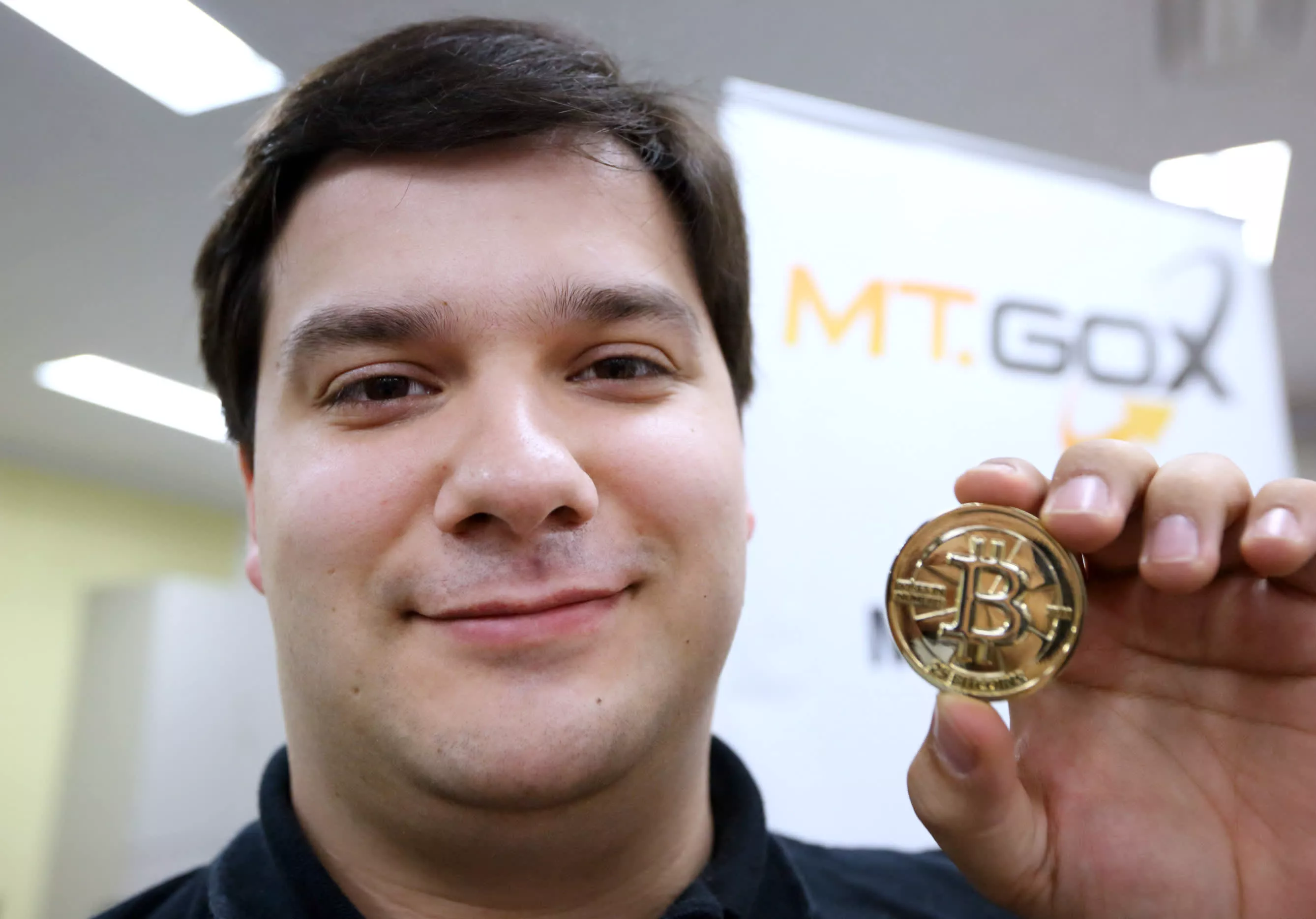
A Radical Proposal Rekindles Bitcoin’s Governance Debate as Mt Gox’s Former Chief Seeks Recovery of Lost Billions
Mark Karpelès proposes a Bitcoin hard fork to recover $5.2B in Mt Gox hack funds, reigniting debate over immutability.
More than a decade after the collapse of Mt Gox, the exchange that once processed roughly 70 percent of global Bitcoin trading, its former chief executive has reignited one of the network’s most sensitive debates. Mark Karpelès has proposed a coordinated Bitcoin hard fork aimed at recovering approximately 79,956 BTC, now worth around $5.2 billion, tied to the platform’s 2011 hack.
In a draft published on GitHub on February 27, 2026, Karpelès called for what he described as “an attempt to start a discussion” around a one-time consensus change. The proposal targets a specific wallet address, known publicly as 1Feex...sb6uF, which received nearly 80,000 BTC following a security breach in June 2011. Those coins have remained dormant for more than 15 years.
Under Bitcoin’s current rules, only the holder of a valid private key can authorize the movement of funds. Karpelès’ proposal would introduce a narrowly tailored consensus rule permitting those specific outputs to be spent using a signature from a designated recovery address. The recovered assets would then flow into the existing court-supervised rehabilitation process in Japan, overseen by trustee Nobuaki Kobayashi, with distributions handled under the country’s civil rehabilitation framework.
Technically, the measure would require a hard fork, a network upgrade that alters consensus rules in a way that makes previously invalid transactions valid. Node operators would need to update their software before a predetermined activation block. The draft openly acknowledges the possibility of a chain split should a portion of the network refuse to adopt the change, potentially resulting in two competing versions of Bitcoin.
The suggestion has quickly revived long-standing tensions between pragmatism and principle. Critics argue that altering ownership rules, even for a single address widely recognized as linked to stolen funds, risks undermining Bitcoin’s core promise of immutability. If the network can intervene once, they ask, what prevents future exceptions after other high-profile hacks? The line between restitution and precedent is perilously thin.
Karpelès counters that the case is exceptional. The coins have remained untouched for over 15 years, and the address is broadly acknowledged by law enforcement and segments of the community as holding misappropriated Mt Gox assets. In his view, a surgical intervention would not rewrite Bitcoin’s monetary policy but rather correct a historic injustice affecting thousands of creditors.
Importantly, the 79,956 BTC in question are separate from the assets currently being distributed to creditors. Following the exchange’s 2014 bankruptcy, approximately 200,000 BTC were recovered and placed under trustee control. Repayments began in mid-2024 and continue through partner exchanges including Kraken, Bitstamp and BitGo. As of early 2026, the estate reportedly holds around 34,689 BTC, with the final repayment deadline extended to October 31, 2026.
Yet the symbolic weight of this new proposal extends beyond creditor compensation. It strikes at the philosophical heart of Bitcoin governance: whether a decentralized network built on rigid cryptographic assurances can or should intervene in extraordinary circumstances. As the industry matures and the financial stakes grow ever larger, the question is no longer theoretical.
The debate now unfolding will test not only technical consensus but also the social contract that underpins the world’s largest cryptocurrency. In seeking to recover billions, Karpelès may have reopened a far deeper conversation about what Bitcoin stands for.