AI-Managed DAOs: The Era of Autonomous Governance
AI-Managed DAOs, Autonomous Governance, AI Agents, DAO treasury auditing, Governance-as-a-Service, MakerDAO Endgame, AI exploit prevention.
Overview
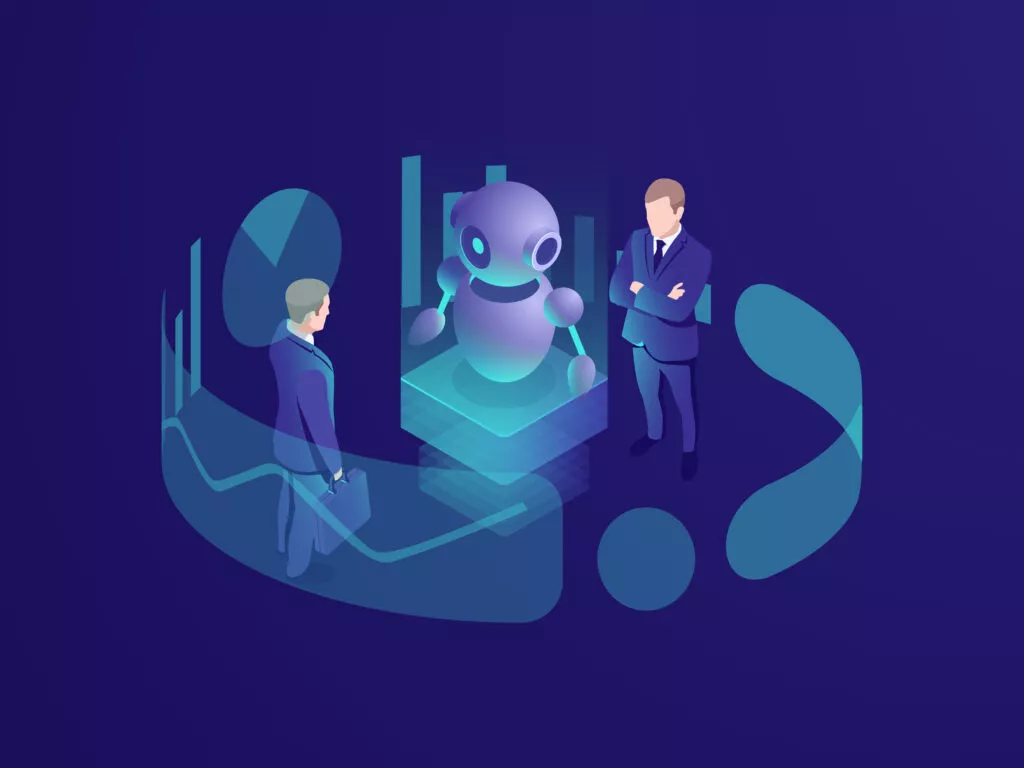
AI-Managed DAOs represent the transition from "Governance by Voting" to "Governance by Intent and Execution." In this model, the human community sets high-level goals and "Guardrail Policies," while specialized AI agents (Large Action Models or LAMs) handle the day-to-day operations. These agents monitor the protocol's health, analyze complex technical proposals, and execute treasury rebalancing. By 2026, AI has become the primary defense mechanism against "governance attacks," where malicious actors try to drain funds through complex proposal manipulation.
Explanation (In-Depth)
The technical infrastructure of an AI-managed DAO in 2026 functions through a decentralized stack of "Oracles and Agents":
Real-World Examples
As of early 2026, several major protocols have fully integrated AI into their core logic:
Advantages/Pros
Disadvantages/Cons
Evolution Through Time
Market Sentiment
In 2026, the sentiment is"Trust, but Verify."The market now values DAOs with AI-governance higher than those without, as they are perceived to be more secure and financially stable. However, there is a growing movement for "Explainable AI" in governance, where every AI-driven action must be accompanied by a human-readable "Rationalization Report" generated on-chain.
Conclusion
AI-Managed DAOs have solved the efficiency gap that nearly killed the decentralized movement. By automating the technical and financial heavy lifting, AI has allowed human communities to return to what they do best: setting vision and building culture. In 2026, the strongest DAOs are not the ones with the most voters, but the ones with the best-aligned AI agents.
- Automated Treasury Auditing:AI agents are directly integrated into the DAO’s smart contracts. They monitor the "Risk-to-LTV" ratios and liquidity depth across multiple chains. If a treasury's exposure to a volatile asset exceeds a pre-defined threshold, the AI executes a rebalance instantly, preventing the "bank run" scenarios seen in earlier years.
- Real-Time Exploit Prevention:Traditional "security councils" are too slow to react to flash-loan attacks. In 2026, AI "Guardian Agents" simulate every incoming transaction in a shadow environment. If a transaction pattern resembles a known or novel exploit, the AI can trigger an emergency pause or front-run the attacker to secure the funds.
- Proposal Synthesis and Voting:To combat voter apathy, AI "Representative Agents" analyze 100-page governance proposals for individual token holders. The AI summarizes the impact on the user’s specific holdings and can even vote on the user's behalf based on their historical "Governance Persona" (e.g., "Conservative Growth" or "Aggressive Innovation").
- Bias Neutralization:AI agents act as neutral moderators in governance forums. They can identify and flag "Sybil attacks" or coordinated bribing campaigns, ensuring that the DAO's direction isn't hijacked by a few wealthy "whales."
- MakerDAO (Endgame Phase):The protocol now uses specialized "SubDAO" AI agents to manage its multi-billion dollar RWA (Real World Asset) portfolio, ensuring that collateralization levels remain optimal across different global time zones.
- Aave Governance V4:Aave has deployed "Risk Service Providers" which are essentially AI bots that adjust interest rate parameters every few minutes based on real-time market volatility, rather than waiting for a weekly human vote.
- Safe (formerly Gnosis Safe):New "AI Modules" allow Safe users to set "Smart Spending Limits" where an AI agent must co-sign any transaction that deviates from the owner's typical spending patterns, acting as a decentralized fraud department.
- Nouns AI:A experiment in generative governance where an AI agent proposes and funds creative projects based on the "vibe" and historical preferences of the Nouns community.
- Operational Speed:AI can respond to market crashes or technical bugs in milliseconds, whereas human governance takes days.
- Efficiency:Eliminates the "fatigue" of manual voting, ensuring that even technical maintenance proposals are passed and executed without delay.
- Unbiased Logic:AI agents follow the math and the "Code-is-Law" ethos, reducing the impact of backroom deals and personal politics.
- Cost Reduction:Dramatically lowers the cost of managing a DAO by reducing the need for expensive human consultants and "growth" committees.
- The "Black Box" Problem:If an AI makes a controversial decision, it can be difficult for human members to understand the underlying logic, leading to a "crisis of trust."
- Alignment Risks:If the AI's "Objective Function" is slightly misaligned with human values, it might optimize for profit at the expense of community ethics.
- Adversarial AI:Hackers in 2026 are using their own "Attack AIs" to find loopholes in the DAO's governing agents, leading to a high-speed "AI vs. AI" arms race.
- Centralization of Development:While the DAO is decentralized, thetraining dataand themodelsused by the AI agents are often controlled by a few elite research labs.
- 2020–2022 (The Discord Era):DAOs were managed through messy chats and manual Snapshot votes. Scams and governance "hostile takeovers" were common.
- 2023–2024 (The Governance Fatigue):Participation rates dropped below 5%. Most DAOs became "oligarchies" run by a few active delegates.
- 2025 (The Agentic Shift):The first "Autonomous Relayers" were introduced to handle simple tasks like fee collection and distribution.
- 2026 (The AI Executive):AI is now a standard component of any "Serious" DAO. Humans provide theWhat(vision), and AI provides theHow(execution).