Anchorage Is Redefining DeFi Access for Institutions by Bridging Custody and Onchain Credit
Anchorage and Spark unveil a model that lets institutions access DeFi lending while keeping collateral in regulated off-chain custody.
Anchorage Digital is taking another step toward reshaping how institutions engage with decentralized finance, unveiling a structure that allows onchain borrowing without requiring assets to leave regulated custody. Through a new partnership with Spark, the DeFi credit protocol linked to the ecosystem formerly known as MakerDAO, Anchorage is offering institutional clients a way to tap blockchain-native liquidity while keeping collateral secured off-chain.
The model addresses a long-standing tension in institutional crypto adoption. While DeFi markets often provide deeper liquidity and more efficient capital deployment, many large asset holders remain reluctant to move high-value collateral onto public blockchains. Anchorage’s approach seeks to remove that friction by separating access to onchain lending from the physical location of the assets backing the loan.
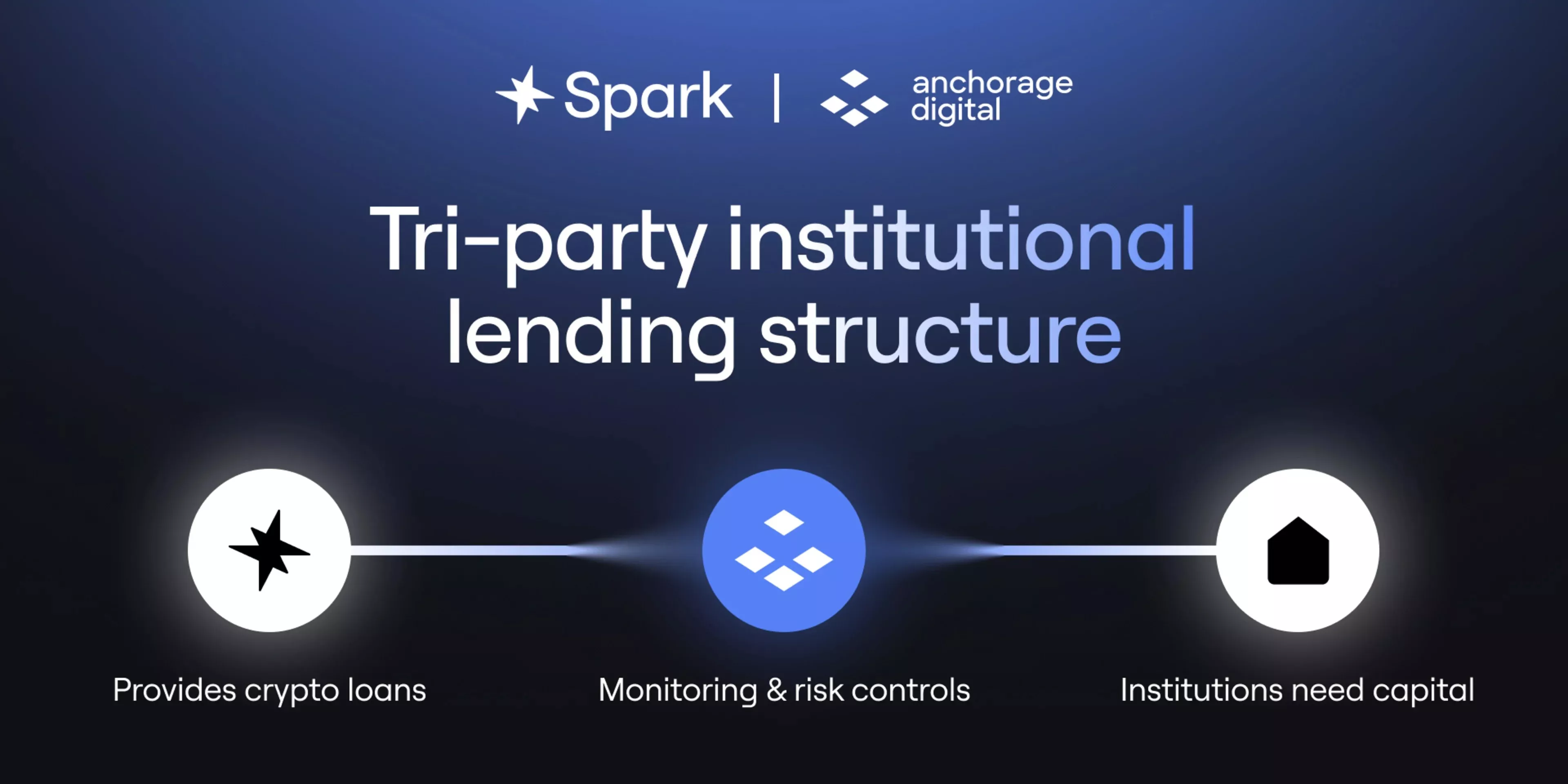
Under the arrangement, institutional borrowers can interact with Spark’s lending infrastructure while maintaining Bitcoin collateral within Anchorage Digital Bank’s custody. Spark’s developer, Phoenix Labs, assumes direct legal title over the pledged assets, while Anchorage’s collateral and settlements platform, Atlas, manages the operational backbone of the transaction. That includes monitoring loan-to-value ratios, handling payments, issuing margin calls and enforcing liquidations when necessary.
Anchorage described the structure as a way to unlock institutional participation without forcing a binary choice between regulatory comfort and DeFi efficiency. In its announcement, the firm said the model creates “a critical new pathway for institutional borrowers that want access to DeFi-native liquidity but are not yet comfortable moving collateral fully on-chain.”
The partnership also reflects Anchorage’s broader evolution. Since becoming the first crypto-native company to secure a US Office of the Comptroller of the Currency banking charter, the firm has steadily expanded beyond pure custody. Its product roadmap now spans wealth management, token lifecycle services and infrastructure aimed at institutional-scale risk management. The Spark collaboration fits squarely into that strategy, positioning Anchorage as an intermediary that can translate DeFi mechanics into forms institutions are prepared to use.
Spark itself operates as a non-custodial protocol that allows users to lend assets for yield or borrow, typically stablecoins, against overcollateralized positions. By outsourcing collateral management to a regulated entity, Spark gains access to a class of borrowers that might otherwise avoid DeFi altogether. The trade-off is deliberate: protocols focus on capital formation and market design, while regulated partners handle custody, compliance and operational controls.
Anchorage chief executive Nathan McCauley framed the deal as a response to institutional expectations rather than a concession to them. “Institutions want access to the most efficient pools of capital in crypto, but they also require operational rigor, custody, and risk management they can trust,” he said, adding that Atlas allows DeFi protocols to meet those standards without sacrificing transparency or speed.
The timing is notable. As more crypto firms enter regulated banking and custody frameworks, competition is intensifying around who can offer credible bridges between traditional finance and decentralized markets. Industry speculation around potential public listings has only added to the pressure. Custody rivals and major exchanges are already testing public market appetite, and Anchorage’s expanding suite of institutional products suggests it is positioning itself for that next phase.
More broadly, the deal illustrates a shift in how DeFi may scale. Rather than pulling institutions fully on-chain, the emerging model brings DeFi to where institutions already are. If successful, that approach could redefine the boundary between centralized custody and decentralized credit, turning it from a fault line into a point of integration.