Belarus Bets on State-Guided Crypto Finance With a New Blueprint for Bitcoin Banks
Belarus has approved a legal framework for bitcoin and crypto banks, creating a state-regulated model that blends traditional banking with digital assets.
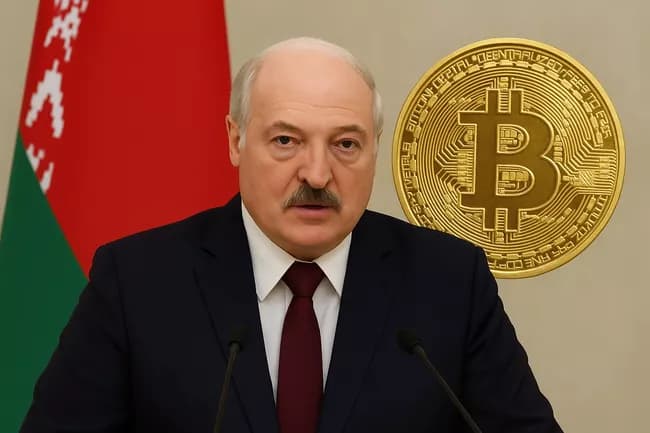
Belarus has taken a decisive step into the institutional crypto economy. President Alexander Lukashenko has signed Decree No. 19, a measure that formally establishes a legal framework for bitcoin and crypto banks and positions the country as one of the few jurisdictions attempting to merge digital assets with state-supervised banking infrastructure.
The decree, titled “On Cryptobanks and Certain Issues of Control in the Field of Digital Tokens,” introduces a new category of financial institution designed to operate at the intersection of traditional banking and blockchain-based services. Under the law, a crypto bank is defined as a joint-stock company registered within Belarus’ High-Tech Park and included in a dedicated registry maintained by the National Bank. This dual requirement effectively places crypto banks inside the country’s most tightly regulated innovation zone.
Unlike commercial banks, these entities will operate as non-bank financial institutions, but with a broad operational mandate. They are permitted to offer conventional services such as deposits, loans, and transfers, while also conducting transactions involving digital tokens. The result is a hybrid financial model that blends fiat-based banking with crypto-native functionality under direct regulatory oversight.
Belarusian authorities have emphasized control as much as innovation. Crypto banks will be subject to capital adequacy rules, risk management standards, anti-money laundering and counter-terrorism financing requirements, and consumer protection obligations. In addition, they must comply with decisions issued by the Supervisory Board of the High-Tech Park, reinforcing the state’s role in shaping how crypto finance evolves domestically.
The government has framed the approach as a way to translate technological experimentation into usable financial products. According to the presidential website, dual regulation will allow crypto banks to offer services that combine “the advantages of traditional banking operations with the technological efficiency, speed, and convenience of digital token transactions.” The language reflects a pragmatic ambition: not to replace the existing system, but to modernize it through controlled integration.
This move builds on Belarus’ long-standing willingness to experiment with crypto regulation. In 2017, the country introduced a decree that created tax-free conditions for cryptocurrency mining and trading, removing the obligation for individuals to declare crypto-related income. Since then, Lukashenko has repeatedly promoted bitcoin mining initiatives, including projects that use surplus electricity to power mining facilities in regions such as Mogilev.
The latest decree also aligns with Belarus’ broader digital finance roadmap. The country plans to roll out its digital ruble into full-scale operation in the second half of 2026, a timeline that suggests crypto banks could eventually play a role in bridging state-backed digital currency with private tokenized assets.
For businesses and users, the framework promises smoother interaction between fiat and crypto systems. By offering regulated channels for conversion, settlement, and custody, crypto banks could reduce friction that often accompanies cross-system transactions. At the same time, the insistence on full oversight signals that authorities want crypto activity firmly anchored to fiat backing and supervisory control.
Internationally, Belarus’ decision mirrors a wider trend. From Europe’s MiCA-driven bank integrations to experiments with tokenized assets worldwide, governments and financial institutions are converging on regulated on-chain finance rather than unregulated parallel systems. Belarus’ approach stands out for its centralization, but it reflects the same conclusion increasingly reached elsewhere: crypto is no longer peripheral, and the question is not whether to regulate it, but how.