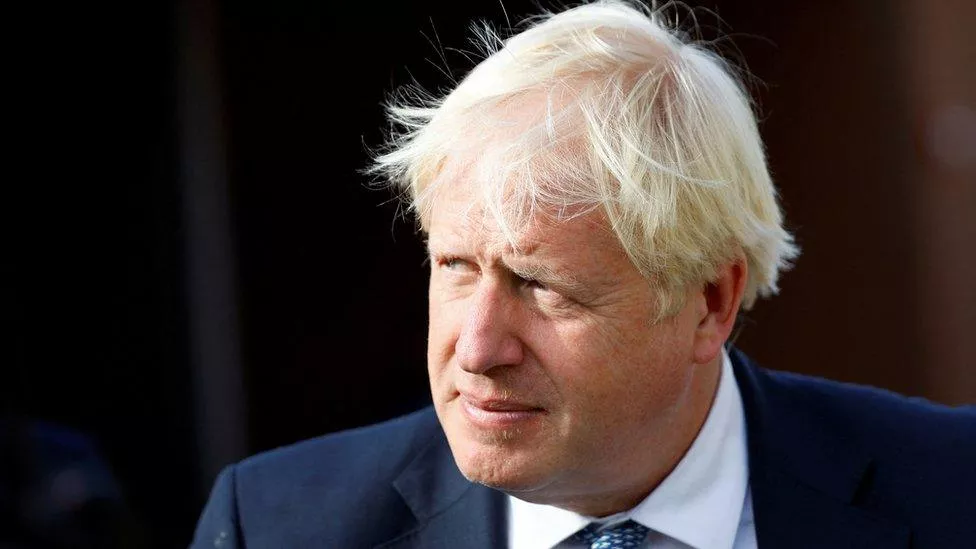
Boris Johnson Rekindles Bitcoin Debate After Dismissing the Digital Currency as a Ponzi Scheme
Boris Johnson calls Bitcoin a Ponzi scheme, sparking backlash from crypto leaders who defend the decentralized digital currency.
A fresh controversy has erupted in the cryptocurrency world after former British prime ministerspan>Boris Johnson/span> publicly dismissed Bitcoin as a “Ponzi scheme,” igniting a wave of criticism from digital asset advocates and industry leaders.
In a recent opinion piece published in thespan>Daily Mail/span>, Johnson argued that the world’s largest cryptocurrency lacks the tangible appeal that gives value to traditional collectibles and alternative assets. The former prime minister contrasted Bitcoin with trading cards from the long-running Japanese franchisespan>Pokémon/span>, suggesting that the latter’s decades of cultural relevance make them easier to understand as investment items.
Johnson illustrated his skepticism through a personal anecdote about a friend who allegedly lost significant money after trusting someone who promised to double his funds through Bitcoin investments. According to Johnson, the friend initially invested £500 before continuing to send additional payments and fees to the promoter over several years. The situation resulted in losses totaling roughly £20,000 and severe financial strain.
The story served as the basis for Johnson’s broader argument that cryptocurrency speculation can resemble classic financial scams, particularly when inexperienced investors become involved. In his view, the enduring demand for collectibles such as Pokémon cards demonstrates how certain assets maintain cultural value over time, something he believes cryptocurrencies have yet to prove.
However, the remarks quickly triggered backlash from prominent figures within the crypto industry who accused Johnson of misunderstanding how Bitcoin operates. Among the most vocal critics wasspan>Michael Saylor/span>, co-founder of the technology firmspan>MicroStrategy/span> and one of the most prominent corporate advocates of Bitcoin.
Saylor responded by emphasizing that Bitcoin’s structure differs fundamentally from a Ponzi scheme. In traditional Ponzi operations, a central organizer promises guaranteed returns and pays early investors with funds collected from newer participants. Bitcoin, by contrast, functions as a decentralized network without a central issuer, promoter or promised yield.
“Bitcoin has no issuer, no promoter, and no guaranteed return,” Saylor explained in response to Johnson’s comments, arguing that the digital currency operates as an open monetary system governed by code and market demand.
Other crypto figures also pushed back.span>Pierre Rochard/span>, chief executive ofspan>The Bitcoin Bond Company/span>, countered Johnson’s criticism by arguing that modern fiat systems built on sovereign debt resemble unsustainable financial structures far more than Bitcoin does.
The debate reflects a long-standing divide between political skeptics and cryptocurrency supporters. Critics often argue that digital assets rely heavily on speculation and lack intrinsic value, while advocates maintain that Bitcoin represents a new form of decentralized money designed to function outside traditional financial institutions.
Despite ongoing criticism from some policymakers and financial commentators, Bitcoin continues to attract institutional interest and widespread global adoption. The network recently passed a symbolic milestone when the 20 millionth Bitcoin was mined, leaving only a small fraction of the asset’s fixed supply yet to be created.
As discussions around digital currencies intensify in political and economic circles, comments from high-profile figures such as Johnson continue to influence public perception. Whether those remarks slow adoption or simply fuel further debate remains an open question.