Chain Abstraction: The End of Fragmentation and the Rise of the Universal Balance
Chain Abstraction is ending blockchain fragmentation. Learn how unified balances and intent-centric UX are making the "chain" invisible for users in 2026.
Overview
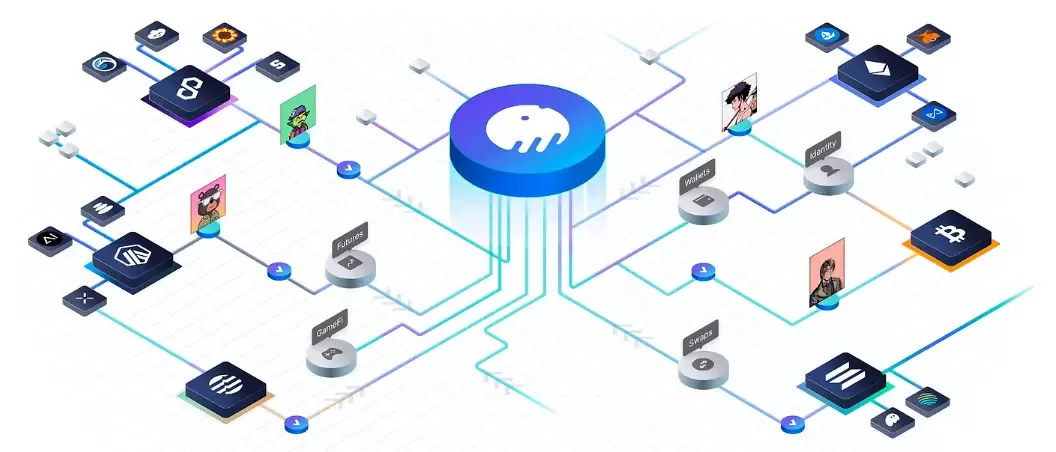
Chain Abstraction is a design philosophy and technical framework that removes the need for users to manually interact with different blockchains. In this new paradigm, the user no longer cares whether an application lives on Solana, Base, Ethereum, or a modular rollup. Instead of seeing fragmented balances—such as "0.5 ETH on Arbitrum" and "200 USDC on Polygon"—the user simply sees a single, unified balance of their purchasing power. By automating the routing of assets, the management of gas fees across various networks, and the execution of cross-chain "intents," Chain Abstraction is turning the decentralized web into a cohesive, single-state environment.
Explanation (In-Depth)
Technical implementation of Chain Abstraction is far more complex than a simple user interface update; it requires a coordinated orchestration layer that sits between the user and the disparate networks.
The core mechanisms driving this unification include:
Real-World Examples
In 2026, the leaders in the "Great Unification" include:
Advantages/Pros
The shift toward a chain-agnostic world offers profound strategic advantages:
Disadvantages/Cons
The convenience of abstraction comes with specific technical and systemic trade-offs:
Evolution Through Time
The industry’s journey toward abstraction has been a response to its own explosive growth:
Market Sentiment
By early 2026, market sentiment isextremely positive, as Chain Abstraction is seen as the final "unlock" for mass-market dApps. Venture capital is no longer funding "yet another L1"; instead, investment is pouring intoOrchestration LayersandCross-Chain Intent Engines. Analysts believe that the networks which thrive in the next five years will be those that "abstract themselves away" best, becoming the silent backends for global finance and social interaction.
Conclusion
Chain Abstraction is the natural conclusion of the modular blockchain roadmap. We have successfully scaled the technology; now, we are scaling the experience. By treating the entire decentralized landscape as a single, unified computer, we are moving past the tribalism of "chain maximalism" and entering an era of true utility. In 2026, the question is no longer "Which chain are you on?" but "What are you trying to do?" When the technology becomes invisible, the real innovation—building for the needs of billions—can finally take center stage.
- Intent-Centric Orchestration:Instead of a user initiating a "bridge" and then a "swap," they sign anIntent. For example, a user may want to purchase an NFT on an Avalanche-based marketplace using their balance on Optimism. The orchestration layer finds the most efficient route, handles the cross-chain messaging, and fulfills the request in a single signature.
- Shared Sequencers and Aggregation Layers:Technologies like Polygon’sAggLayeror Optimism’sSuperchainallow multiple chains to share state and liquidity. This creates "near-atomic" cross-chain transactions, making the movement of assets between participating networks feel instantaneous and risk-free.
- Multi-Chain Signatures (MPC & Threshold Crypto):Using Chain Abstraction protocols likeNEAR, a single account can sign transactions on any other blockchain. This means a user’s "Master Account" can control assets on Bitcoin, Ethereum, and Cosmos without the user ever needing to switch networks or manage multiple private keys.
- Gas Abstraction Layers:Specialized service providers act as "relayers" that accept any token (or even traditional fiat) to cover the gas costs of the underlying network. The user simply sees a "service fee" or no fee at all if the application sponsors the transaction.
- NEAR Protocol:A pioneer in the space, NEAR’s "Chain Abstraction" stack allows users to interact with any blockchain using a single account, essentially turning NEAR into a universal remote for the decentralized web.
- Polygon AggLayer:A unified liquidity layer that connects various ZK-rollups, allowing them to feel like a single, massive chain where assets can be moved without the typical 7-day withdrawal periods or high bridging fees.
- Across & Li.Fi:These "bridging aggregators" have evolved into intent-fulfillment engines. They no longer just provide paths for users to bridge; they act as the backend "solvers" that execute complex cross-chain commands for consumer apps.
- The Interchain (Cosmos/IBC):The expansion of the Inter-Blockchain Communication (IBC) protocol to Ethereum and other ecosystems has created a standardized "language" for chains to speak to one another, further dissolving the borders between networks.
- Zero User Friction:Users no longer need to understand technical concepts like "RPC endpoints," "bridge delays," or "wrapping assets."
- Unified Liquidity:By breaking down the walls between chains, capital can flow where it is most needed, reducing slippage and increasing capital efficiency across the entire ecosystem.
- Simplified Development:Developers can build applications that tap into the liquidity and users of all chains simultaneously, rather than having to choose a single network and "hope" for its success.
- Resilience:If one network experiences congestion or a downtime event, the orchestration layer can automatically route transactions through a more stable alternative without the user ever noticing.
- Centralization of Solvers:The "solvers" or "fillers" that fulfill user intents are often sophisticated professional entities, which could lead to a new form of intermediary centralization.
- Compounded Security Risks:If the orchestration layer or the cross-chain messaging protocol is compromised, it could potentially impact assets across multiple abstracted chains.
- Increased Latency:While the goal is "instant" transactions, the reality of verifying states across multiple chains can still introduce slight delays compared to a single-chain environment.
- Complexity for Debugging:When a transaction fails in an abstracted world, pinpointing exactly where the error occurred—whether it was the source chain, the destination chain, or the relayer—becomes significantly harder for developers.
- The Monolithic Era (2015-2020):Most users stayed on one chain (Ethereum) because it was the only place where things happened.
- The Fragmentation Era (2021-2024):The rise of L2s and alternative L1s led to a "fragmented" experience where users had to be technical experts to manage their portfolios across different ecosystems.
- The Aggregation Era (2025):The first "AggLayers" and unified sequencers began to link networks, making certain ecosystems (like the "Superchain") feel like a single entity.
- The Invisible Era (2026):Chain Abstraction becomes the industry standard. The user experience is unified, and the "chain" is relegated to a technical detail in the background.