DePIN 2.0: The Community-Owned Infrastructure Revolution
DePIN 2.0 is rebuilding the world. Learn how community-owned 5G, energy grids, and AI compute are disrupting billion-dollar monopolies in 2026.
Overview
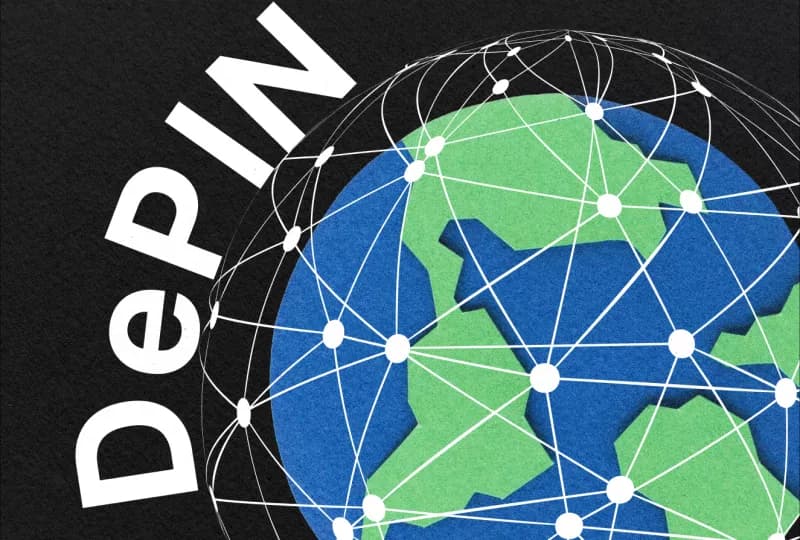
DePIN (Decentralized Physical Infrastructure Networks) 2.0 is the intersection of blockchain-based coordination and the physical world. Unlike traditional infrastructure (telecom, energy, or cloud) which requires massive upfront capital (CAPEX) from a single corporation, DePIN crowdsources the hardware and maintenance from thousands of individual contributors. These contributors are rewarded with tokens for providing real-world services. In 2026, DePIN is no longer a "crypto project"; it has become the "invisible plumbing" of the modern economy, powering everything from urban 5G connectivity to rural solar grids.
Explanation (In-Depth)
The success of DePIN 2.0 in 2026 is driven by the "Token Incentivized Flywheel":
Real-World Examples (2026 Landscape)
Advantages/Pros
Disadvantages/Cons
Evolution Through Time
Market Sentiment
In 2026, market sentiment isextremely bullish on "Tangible Tech."Investors have moved away from purely speculative tokens toward protocols that have "Physical Moats"—real hardware in the real world. DePIN 2.0 is seen as the bridge that finally brought Web3 to the average person’s daily life, solving real problems like internet access and energy costs.
Conclusion
DePIN 2.0 is the ultimate test of decentralized coordination. By aligning financial incentives with physical labor and hardware, we are witnessing the end of the centralized infrastructure monopoly. In 2026, the world’s most important networks are no longer owned by "Big Tech" or "Big Energy"; they are owned by the people who use them.
- Distributed CAPEX:Instead of a company spending $10 billion to build a 5G network, 100,000 individuals spend $1,000 each to host a "small cell" node. The infrastructure exists before a single dollar of traditional debt is raised.
- The Compute Crunch & AI:The massive demand for AI training and inference in 2026 has outstripped the capacity of AWS and Google Cloud. DePIN 2.0 protocols allow anyone with a high-end GPU to join a global "supercomputer," providing the necessary compute power for LLMs at a fraction of the price of centralized providers.
- Virtual Power Plants (VPPs):In the energy sector, DePIN 2.0 enables "Prosumers"—households with solar panels and batteries—to act as a decentralized power plant. When the grid is under stress, the network automatically sells excess stored energy back to the market, rewarding homeowners with tokens.
- Proof of Physical Work (PoPW):To prevent fraud, 2026 protocols use advanced "Zero-Knowledge" location proofs and hardware signatures. This ensures that a node is actually where it says it is and is providing the service it claims, without compromising the owner’s privacy.
- Helium Mobile & 5G:Moving beyond IoT, Helium has become a top-tier mobile carrier in several countries, using community-hosted 5G nodes to provide ultra-low-cost data plans that rival traditional telecoms.
- PowerLedger & Solar DePINs:In regions like Australia and Southeast Asia, decentralized energy networks allow neighbors to trade solar energy directly, bypassing the traditional utility monopoly and stabilizing the local grid.
- Render & io.net:These protocols have become the backbone of the "AI Industrial Revolution," aggregating millions of idle GPUs into a decentralized cloud that powers Hollywood movie rendering and AI model training.
- Hivemapper:A decentralized mapping network where drivers use specialized dashcams to collect real-time street imagery. In 2026, Hivemapper’s data is fresher and more granular than Google Maps because it updates every time a contributor drives to work.
- Hyper-Speed Deployment:Infrastructure can be deployed globally in months rather than years because it doesn't wait for corporate approval or massive bank loans.
- Resilience:Because the network is distributed across millions of locations, it is nearly impossible to take down via a single point of failure or a cyberattack.
- Fair Pricing:By removing the "middleman" (the corporation), the cost of service is dictated by the actual cost of electricity and hardware, leading to massive savings for consumers.
- Wealth Distribution:The profits from infrastructure move from corporate shareholders to the individuals who actually host and maintain the equipment.
- Hardware Maintenance:Unlike digital DeFi, DePIN requires physical upkeep. If a node breaks or the power goes out, the service is interrupted.
- Regulatory Pushback:Traditional telecom and energy monopolies are lobbying governments to restrict DePIN networks, citing "national security" or licensing concerns.
- Token Volatility:If the value of the reward token drops significantly, contributors may stop maintaining their hardware, leading to network degradation.
- 2019–2022 (DePIN 1.0):Focus was primarily on decentralized storage (Filecoin) and LoRaWAN (Helium IoT). Most users were "crypto-native."
- 2023–2024 (The Connectivity Wave):The shift to 5G and mapping begins. Real-world utility starts to outweigh speculation.
- 2025 (The AI Convergence):The GPU shortage makes DePIN compute a global necessity for AI startups.
- 2026 (The Utility Era):DePIN is "boring." People use 5G or energy credits without knowing a blockchain is involved. It is simply the cheaper, better option.