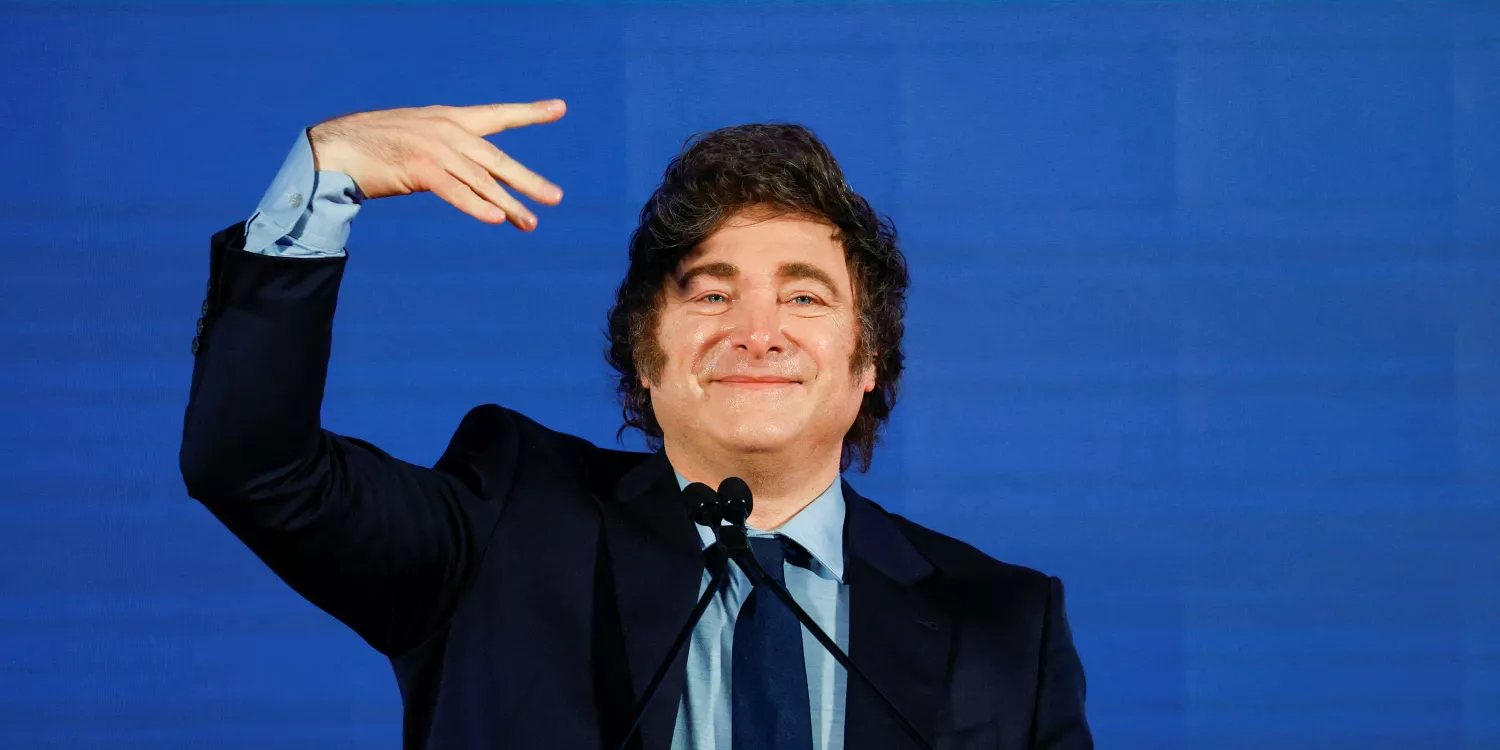
Draft Blockchain Pact Deepens Political Storm Around Milei and the LIBRA Collapse
Javier Milei, Hayden Davis, LIBRA token, Argentina politics, Crypto investigation, Blockchain advisory, USDC transfers, Political scandal
Argentina’s political crisis over the failed LIBRA token has entered a more volatile phase after prosecutors reportedly uncovered draft versions of a confidential blockchain advisory agreement linking Presidentspan>Javier Milei/span> to LIBRA co-creatorspan>Hayden Davis/span>.
According to local reports citing findings from the Public Prosecutor’s Office, forensic analysts recovered multiple copies of the document from the seized phone of Mauricio Novelli, a lobbyist allegedly involved in the token’s launch. The drafts, exchanged between Novelli and Davis, appear to precede a final version said to have been signed by Milei roughly two weeks before LIBRA debuted on February 14, 2025.
The existence of a “confidential agreement” has been repeatedly denied by Milei. Yet investigators claim the recovered files show successive revisions of a pact that formalized Davis’s role as a blockchain adviser to the Argentine government. The advisory position was reportedly framed as unpaid, or “ad honorem,” but bound by non-disclosure obligations. The language described Davis as providing “professional support, in line with global trends in decentralization and technological modernization,” with assurances of “the highest quality and confidentiality.”
The implications stretch beyond semantics. If authenticated, the agreement would directly connect the president to a project that later imploded, triggering allegations of insider coordination and financial misconduct. Prosecutor Eduardo Taiano has reportedly indicated that further clarification will be required from senior officials within the presidential administration, including the office overseen by Karina Milei, the president’s sister and General Secretary.
The probe has also focused on Novelli’s communications with a circle of lobbyists, including Manuel Terrones Godoy and Sergio Morales, who are alleged to have played roles in LIBRA’s promotion and subsequent collapse. Investigators said several WhatsApp conversations were found empty or deleted, though some data was recovered through forensic extraction. Analysts noted that “all individual conversations and those related to WhatsApp groups made up of Novelli, Terrones Godoy and Sergio Morales were found to be empty or had been deleted,” raising further suspicions about coordinated activity.
Financial transfers uncovered in parallel reporting have intensified scrutiny. On the same day the advisory agreement was allegedly signed, two payments totaling approximately $1 million in USDC were sent from wallets linked to Davis to an account associated with a 75-year-old retiree, before being forwarded to a wallet connected to Novelli. The transaction chain has become central to investigators’ efforts to determine whether the advisory role was truly unpaid.
The controversy has also ensnared prominent figures in the crypto sector. Cardano founderspan>Charles Hoskinson/span> publicly claimed he was asked for a five-figure payment in exchange for a meeting with Milei, an offer he said he rejected despite promises that “magical things will happen.”
More than a year after LIBRA’s collapse, critics argue the investigation has progressed unevenly, with delays in key forensic disclosures. Milei has yet to appoint legal counsel to represent him personally, while Davis has not faced formal detention as of late 2025.
What began as an ambitious experiment in aligning national leadership with blockchain innovation has instead evolved into a test of institutional accountability. The drafts discovered on a seized phone may now prove pivotal in determining whether LIBRA was a policy misstep, a political liability, or something far more consequential.