Europe’s Banks Close Ranks on a Digital Euro as BBVA Backs a New Stablecoin Challenge to the Dollar
BBVA joins Qivalis, a European banking consortium building a regulated euro-pegged stablecoin to challenge dollar dominance in digital payments.
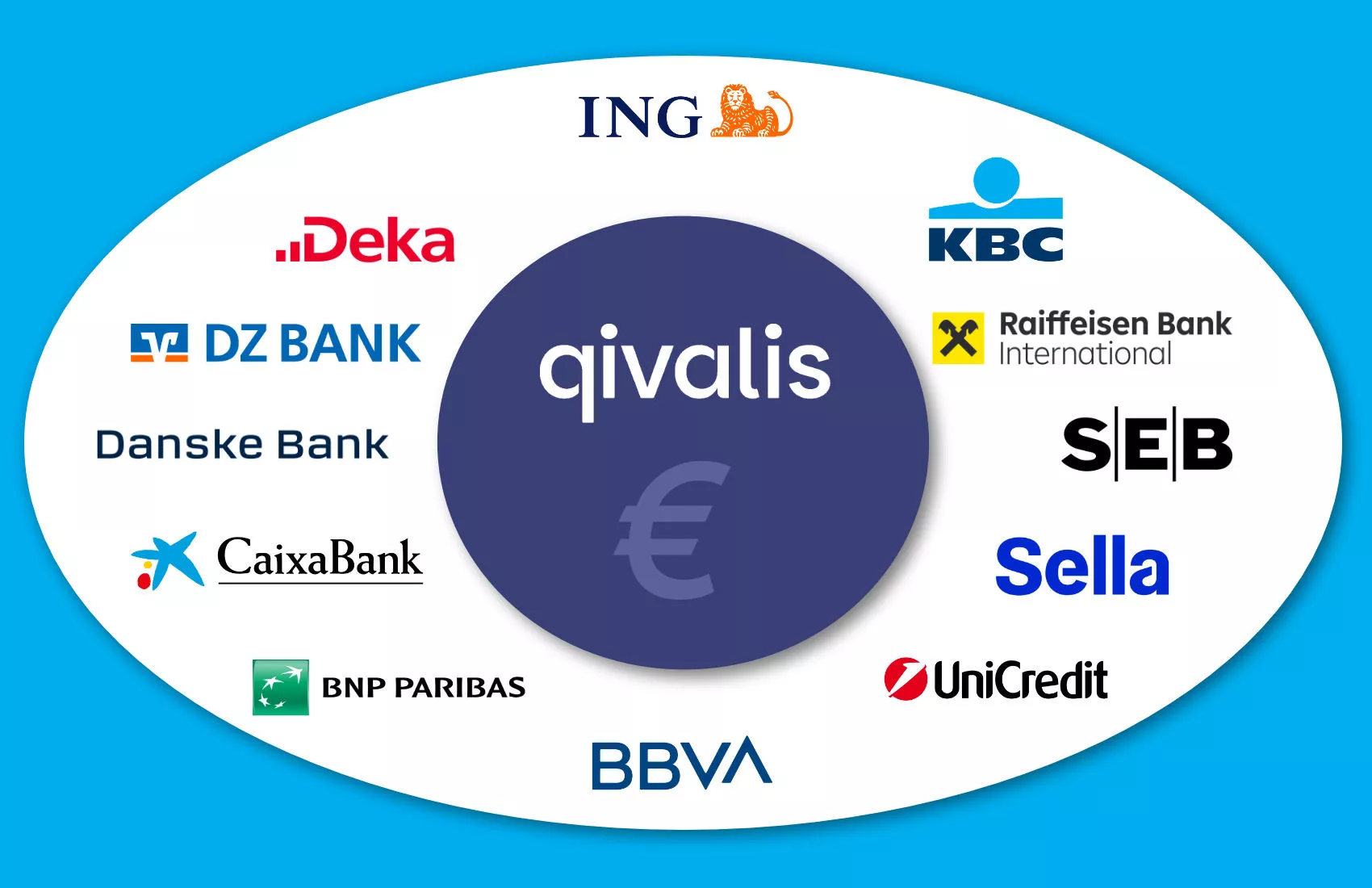
BBVA’s decision to join Qivalis marks another decisive step in Europe’s attempt to reclaim ground in the fast-growing market for digital money, long dominated by dollar-pegged stablecoins. By becoming the twelfth bank to enter the consortium, Spain’s second-largest lender is not merely adding its weight to a technical experiment but endorsing a broader strategic vision: a euro-backed alternative designed by banks, for banks, within a tightly regulated European framework.
Qivalis was established as a joint venture based in Amsterdam and operates under the rules set out by the European Union’s Markets in Crypto-Assets regulation. Its ambition is to issue a shared euro-pegged stablecoin that can be used for payments, transfers and the settlement of tokenized financial assets on blockchain rails. For participating banks, the promise lies in combining the speed and efficiency of on-chain transactions with the safeguards, governance standards and consumer protections associated with traditional banking.
The commercial launch is planned for the second half of 2026, once the consortium completes the remaining technical development and secures final regulatory approvals. If successful, the initiative could significantly reduce transaction costs and settlement times, particularly for institutional clients and cross-border payments, while keeping activity within Europe’s regulatory perimeter.
BBVA frames its participation as part of a longer-term strategy to adapt banking models to a digital future rather than surrender ground to crypto-native players. Alicia Pertusa, head of partnerships and innovation at BBVA CIB, described the project as an exercise in “collaboration between banks,” aimed at creating common standards that support the evolution of financial services while delivering practical innovation to clients. She emphasized that BBVA brings years of experience in developing and testing digital-asset use cases, positioning the bank as more than a passive participant.
From Qivalis’s perspective, BBVA’s arrival strengthens both credibility and scale. Chief executive Jan-Oliver Sell welcomed the move as evidence of growing alignment among European lenders committed to building a MiCA-compliant euro stablecoin infrastructure. With twelve banks now involved, the consortium presents itself as an institutional-grade alternative capable of serving businesses and consumers not only across Europe but globally.
The timing is significant. Dollar-pegged stablecoins such as USDT and USDC continue to dominate a global market valued at roughly $300 billion, while euro-backed options remain marginal. This imbalance has raised concerns among European policymakers and financial institutions about strategic dependence on U.S.-denominated digital assets. Qivalis is widely seen as a bank-led response to that challenge, designed to bolster Europe’s financial autonomy without abandoning regulatory rigor.
Beyond geopolitics, the project also reflects competitive pressures. As blockchain-based settlement and tokenized assets gain traction, traditional banks face a choice between adapting or losing relevance. By acting collectively, Qivalis members hope to compete in this evolving space while offering higher levels of trust and lower perceived risk than some crypto-native issuers.
BBVA’s entry does not, on its own, resolve Europe’s stablecoin gap. But it adds momentum to an initiative that seeks to anchor digital finance in familiar institutions and legal structures. Whether that model can rival the scale and liquidity of dollar-based stablecoins remains uncertain. What is clear is that Europe’s largest banks are no longer content to watch the future of money develop elsewhere.