FBI Flags Malicious TRC20 Token on Tron as Scammers Exploit Fear to Breach Crypto Wallets
FBI warns of malicious TRC20 token on Tron as crypto scams shift toward phishing and user manipulation tactics.
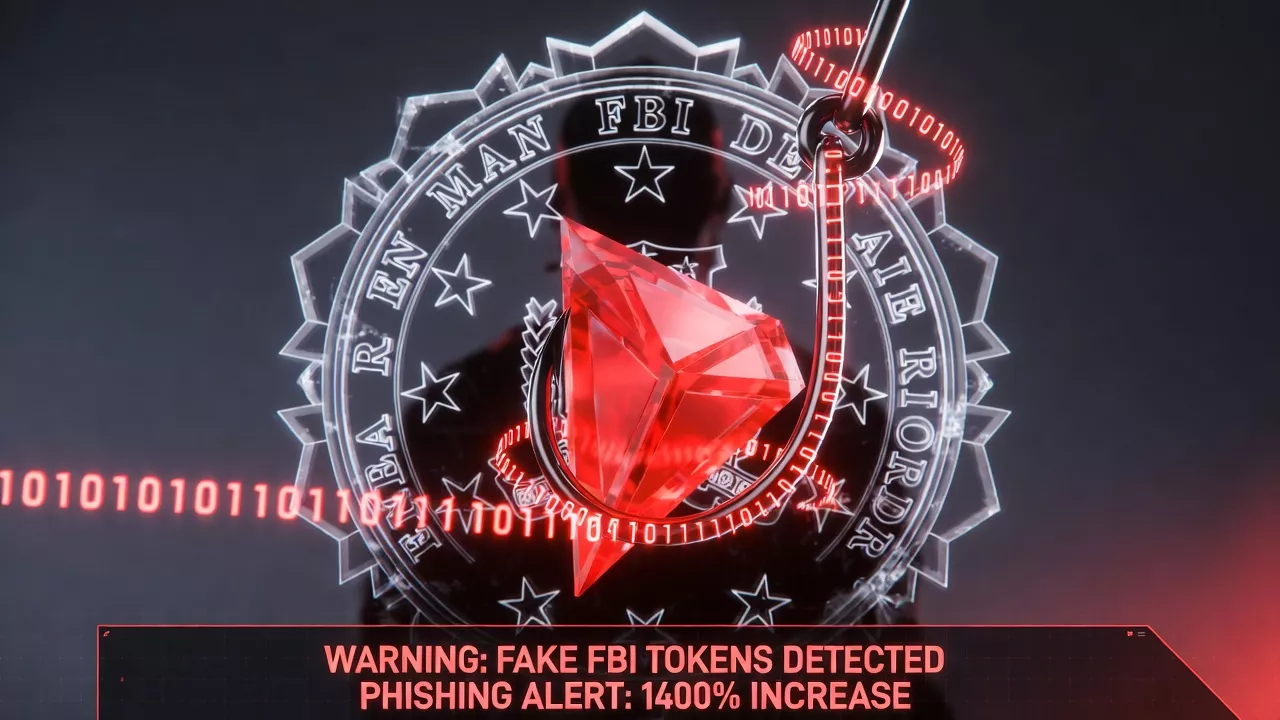
A fresh warning from the FBI is drawing attention to a dangerous evolution in cryptocurrency fraud, where deception has become more effective than technical exploitation. The agency has identified a phishing campaign on the Tron network involving a malicious TRC20 token that impersonates official communication, highlighting how attackers are increasingly targeting user behavior rather than blockchain vulnerabilities.
The alert, issued by the FBI’s New York field office, outlines a scheme in which victims receive a fraudulent token labeled as an “FBI message” directly in their wallets. Unlike traditional scams that rely on emails or external messaging, this tactic embeds the threat within the blockchain itself, making it appear more credible to unsuspecting users. The message instructs recipients to complete an urgent “AML verification,” warning that failure to comply could result in restricted access to their assets.
This sense of urgency is central to the attack. Users who follow the instructions are redirected to a counterfeit website designed to replicate official interfaces. Once there, they are prompted to enter personal information or connect their wallets, effectively granting attackers access to their funds. Authorities have urged users to avoid interacting with these tokens entirely and to report any exposure through official cybercrime reporting channels.
The mechanics of the scam reflect patterns previously identified by blockchain security firm AMLBot, which documented similar campaigns targeting Tron wallets. In those cases, attackers monitored on-chain activity to identify addresses affected by stablecoin freezes, particularly involving Tether. Once a wallet was flagged, it would receive a so-called “survey token” directing the user to a fake recovery platform. Victims were then encouraged to connect their wallets and pay a fee in TRX, unknowingly authorizing malicious access.
What makes the current FBI warning especially significant is how clearly it aligns with a broader transformation in crypto-related crime. Recent findings from analytics firm Nominis show that while losses from technical exploits have declined sharply, social engineering attacks are accelerating. Instead of attempting to break smart contracts or network security, attackers are relying on phishing links, fake user interfaces, and deceptive transaction approvals.
This shift signals a critical change in where risk now resides. As blockchain infrastructure becomes more secure, the weakest link is no longer the code but the individual user. By impersonating trusted institutions such as law enforcement, attackers gain an advantage that no exploit can replicate: credibility.
Recent breaches reinforce this trend. In early March, a security incident involving Bitrefill was traced back to compromised employee credentials rather than a flaw in its systems, resulting in significant losses. Investigators later linked the attack to organized cybercrime groups, underscoring how access through human error has become a primary entry point.
The emergence of malicious TRC20 tokens masquerading as FBI communications serves as a stark reminder that the crypto ecosystem is entering a new phase of risk. Security is no longer just about safeguarding infrastructure but about recognizing manipulation in its most convincing forms. As scams grow more sophisticated, user awareness may become the most important line of defense.