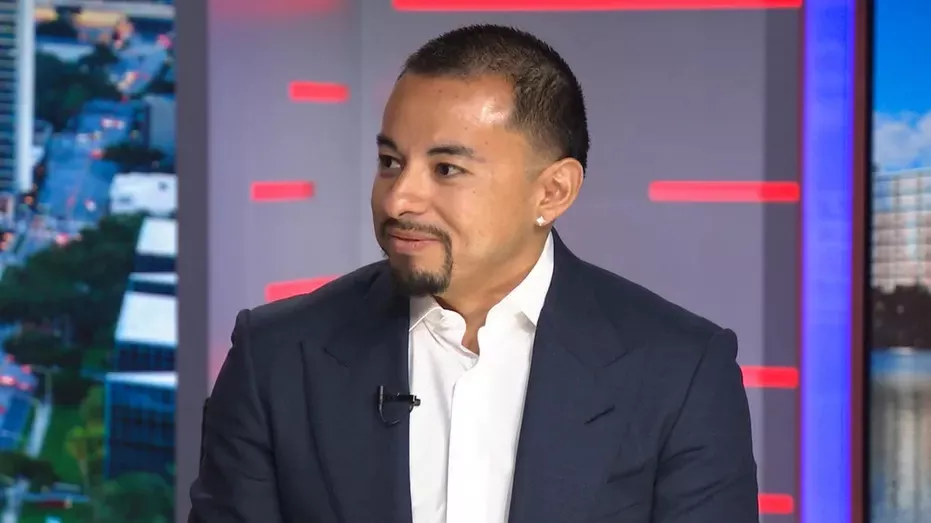
Federal Crackdown Intensifies as Goliath Ventures Executive Faces Charges in 328 Million Dollar Crypto Fraud
DOJ arrests Goliath Ventures CEO over alleged $328M crypto Ponzi scheme as federal crackdown on digital asset fraud intensifies.
U.S. federal authorities have arrested the chief executive of a purported venture capital firm in what prosecutors describe as a sweeping cryptocurrency Ponzi scheme that allegedly siphoned $328 million from investors. The case marks yet another high-profile enforcement action as regulators and law enforcement agencies escalate scrutiny of crypto-linked investment vehicles.
According to thespan>United States Department of Justice/span>, 34-year-old Christopher Alexander Delgado, president and CEO of Goliath Ventures, was taken into custody on charges of wire fraud and money laundering. The complaint, filed by the U.S. Attorney’s Office for the Middle District of Florida, alleges that Delgado operated the scheme between January 2023 and January 2026, presenting Goliath as a venture capital firm investing in cryptocurrency liquidity pools.
Prosecutors contend that the operation followed a familiar script. Delgado allegedly promised investors consistent monthly returns and cultivated credibility through charitable sponsorships, upscale networking events, glossy marketing materials and personal referrals. Early participants reportedly received periodic payments framed as investment gains, reinforcing the illusion of profitability.
Behind the façade, authorities argue, Goliath Ventures functioned as a classic Ponzi structure. Funds from new investors were allegedly used to satisfy withdrawal requests and “returns” owed to earlier participants. This cycle, investigators say, allowed Delgado to accumulate more than $328 million over three years while sustaining the appearance of a thriving crypto fund.
The complaint further alleges that substantial portions of investor capital were diverted for personal enrichment. Prosecutors claim Delgado spent between $1.15 million and $8.5 million on four residential properties and financed luxury travel, high-end accommodations and elaborate corporate events with victim funds. Such expenditures, if proven, would underscore the pattern seen in previous digital-asset fraud cases, where lifestyle inflation often accompanies operational opacity.
The investigation remains ongoing, with Homeland Security Investigations and the Internal Revenue Service’s Criminal Investigation division participating. Federal authorities have urged alleged victims to come forward under protections afforded by the Crime Victims’ Rights Act. If convicted on all counts, Delgado faces a potential maximum sentence of 30 years in federal prison.
The arrest comes amid a broader wave of enforcement targeting crypto-based Ponzi operations. Just last week, a U.S. court sentenced Ramil Ventura Palafox, former CEO ofspan>Praetorian Group International/span>, to 20 years in prison for orchestrating a $200 million Bitcoin-related fraud that affected tens of thousands of investors. Like the Goliath case, prosecutors said the scheme relied on false representations about cryptocurrency trading activity.
These cases reflect mounting institutional resolve to police misconduct in digital asset markets. While legitimate blockchain innovation continues to evolve, fraudulent schemes exploiting crypto’s complexity have repeatedly drawn regulatory backlash. For policymakers, the pattern reinforces calls for stronger investor protections and clearer compliance standards across emerging financial technologies.
For market participants, the message is equally direct. High-yield promises, opaque strategies and aggressive marketing should invite skepticism, particularly when tied to volatile digital assets. As enforcement actions intensify, the crypto industry faces a pivotal moment: either strengthen governance and transparency, or risk further reputational and regulatory damage.