Intents & Solvers: The Declarative Architecture
Stop micromanaging your transactions. Discover how Intents and Solvers in 2026 allow you to simply state your goal while experts handle the complexity.
Overview
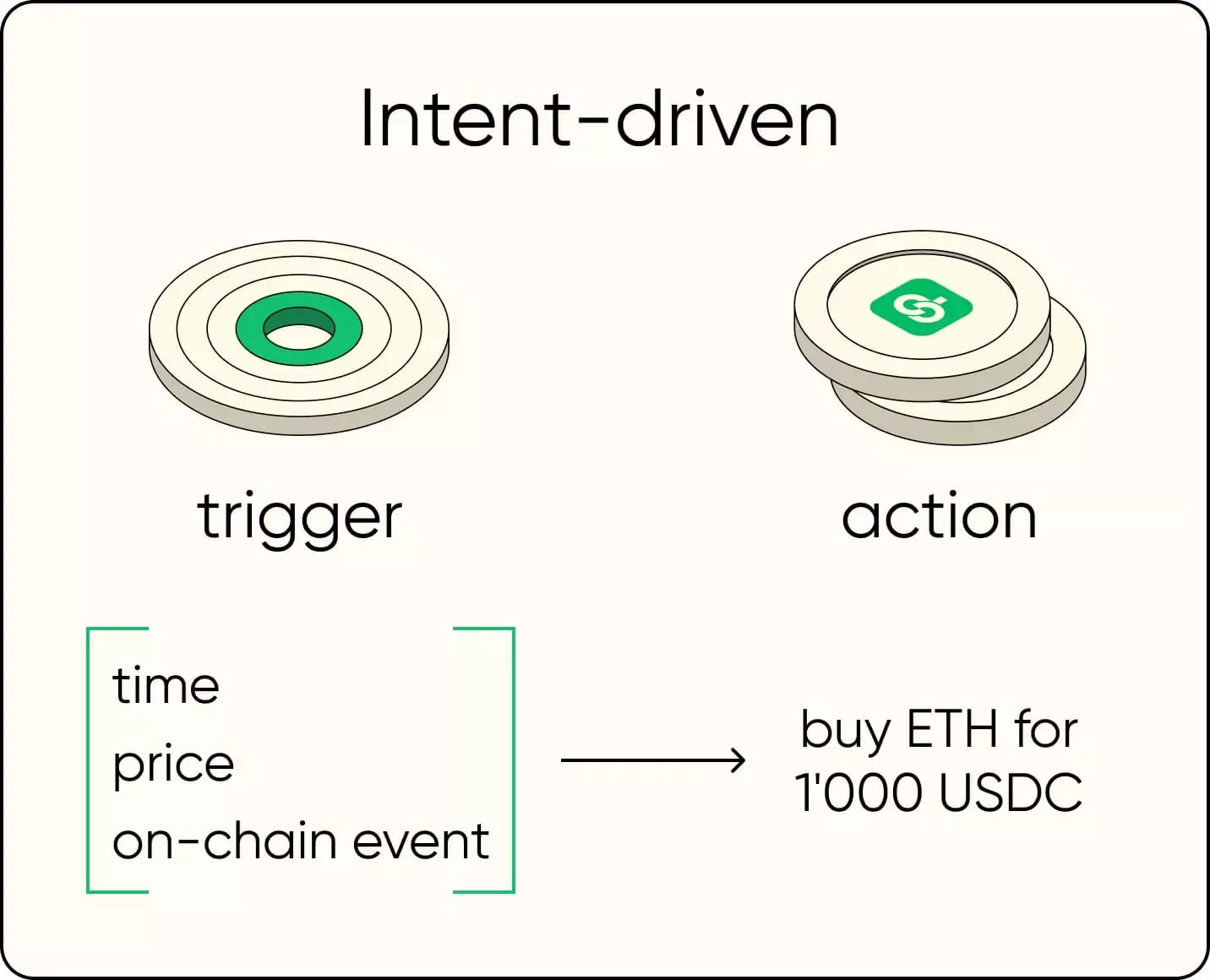
Traditionally, using blockchain was like giving a taxi driver turn-by-turn directions: "Turn left at 0x45..., accelerate on the Bridge protocol, and stop at the Uniswap pool." If you made one mistake, you lost your money. In 2026,Intentsallow you to simply say: "I want to be at the airport by 5 PM for less than $50." You specify theoutcome, and a network of third-party professionals calledSolverscompete to find the most efficient, cheapest, and fastest way to get you there.
Explanation (In-Depth)
The "Intent-Centric" architecture is built on a declarative model:
Real-World Examples (2026 Landscape)
Advantages/Pros
Disadvantages/Cons
Evolution Through Time
Market Sentiment
In 2026, the sentiment ismassively bullish on adoption.Intent-based architecture is the reason why your "non-crypto" friends can finally use DeFi without calling you for help. It has turned the "dark forest" of crypto into a "concierge service." Investors are focused on the "Solver Economy," seeing it as the next big professional niche in the Web3 space.
Conclusion
Intents & Solvers have flipped the script on blockchain usability. By moving from "how" to "what," we have removed the technical barriers that held back millions of users. In 2026, the blockchain is finally invisible—it is just the secure, automated engine that makes your intentions a reality.
- What is an Intent?It is a signed message that defines a desired end-state. Instead of a transaction that says "Execute Function X," an intent says "I will trade 1 ETH only if I receive at least 3,500 USDC on the Arbitrum network."
- The Role of the Solver:Solvers are sophisticated actors (market makers, bots, or specialized algorithms) that monitor the "Intent Pool." They compete in a real-time auction to fulfill your request. The solver that provides the best price or the fastest execution "wins" the right to execute your intent.
- Counterparty Discovery:Solvers can combine multiple intents to create "Coincidences of Wants" (CoW). If User A wants to trade BTC for ETH, and User B wants ETH for BTC, a solver can match them directly off-chain, saving both users from paying massive fees to a liquidity pool.
- Chain Abstraction:In 2026, intents have effectively hidden the "multi-chain" problem. You no longer need to know what chain your assets are on. You just sign an intent to "Buy an NFT on Base using my SOL," and solvers handle the bridging, gas fees, and swaps behind the scenes in a single atomic step.
- Anoma:A pioneer of the "intent-centric" base layer. Anoma is a protocol where everything—from trading to social interactions—is treated as an intent, allowing for a fully decentralized discovery and matching process.
- CowSwap (CoW Protocol):The leader in "MEV-protected" trading. It uses solvers to find the best prices across all DEXs and private order books, ensuring users never get "front-run" by malicious bots.
- UniswapX & 1inch Fusion:These platforms have moved away from traditional "pools" to "auction-based" systems where resolvers/solvers compete to fill your trades using their own liquidity or external sources.
- Essential:The first "Intent-Native" Layer 2. It doesn't use a traditional mempool; instead, it's a chain built specifically to support complex, multi-step intents as its primary way of functioning.
- Simplified UX:You don't need to worry about "gas tokens," "slippage settings," or "bridging." You just state your goal.
- MEV Protection:Because your intent is a commitment to an outcome, solvers cannot "sandwich" you. If the outcome isn't met, the transaction simply never happens.
- Gas Abstraction:In 2026, solvers often pay the gas for you in the native token of the destination chain, allowing you to pay your fees in the same token you are trading (e.g., paying for an ETH trade with USDC).
- Better Pricing:Competitive auctions ensure that solvers find the best possible route across the entire global liquidity landscape.
- Solver Centralization:There is a risk that a few massive market makers (the "Solvers") become gatekeepers, potentially censoring certain types of intents or colluding to reduce competition.
- Verification Complexity:Proving that a solver truly found the "best" path is mathematically difficult, requiring advanced "Proof of Solver" mechanisms.
- Off-Chain Dependency:Intents often rely on off-chain "Intent Pools" before being settled on-chain, which can introduce new types of censorship or data availability risks.
- 2018–2022 (The Manual Era):Users had to manually bridge, swap, and manage gas for every single step.
- 2023–2024 (The Early Intent Phase):Protocols like CowSwap and 1inch Fusion prove that "off-chain matching" is superior for large trades.
- 2025 (The Standard Era):ERC-7683 is adopted as a universal standard, allowing different solver networks to "talk" to each other across chains.
- 2026 (The Intent-Native Era):Most users no longer interact with "blockchains" directly; they interact with "Intent Interfaces." The blockchain has become the "settlement layer" for decisions made in the intent layer.