Jamie Dimon Demands Equal Rules for Stablecoin Rewards as Crypto Regulation Debate Intensifies
Jamie Dimon calls for bank level regulation on stablecoin rewards amid Senate crypto market structure debate.
The battle over how to regulate stablecoins has moved from technical policy circles into the center of America’s financial debate. At the heart of it standsspan>Jamie Dimon/span>, who is calling for what he describes as a simple principle: equal rules for equal products.
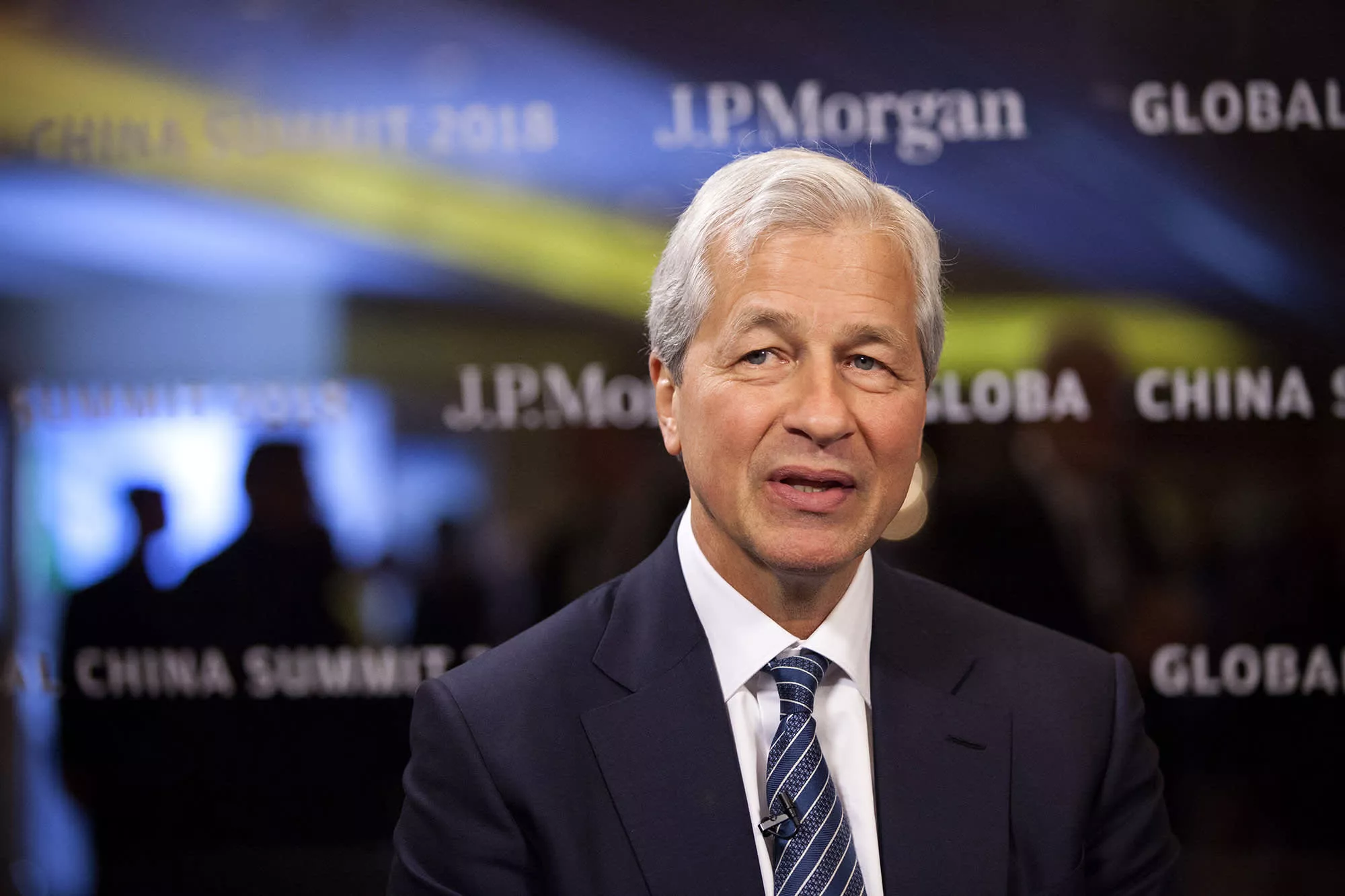
Speaking on CNBC’s The Exchange, thespan>JPMorgan Chase/span> chief executive made clear that while he welcomes innovation in blockchain technology, he draws a firm line when digital asset firms begin offering rewards that resemble traditional bank interest. In his view, any company that holds customer balances and pays yield is effectively operating as a bank and should be regulated accordingly.
“A compromise would be that you could pay rewards on transactions, not balances,” Dimon said. “If you are going to be holding balances and paying interest, that’s the bank. You should be regulated by a bank.” The distinction is more than semantic. For banks, paying interest on deposits triggers an extensive framework of oversight, including FDIC insurance requirements, capital and liquidity standards, anti money laundering rules and community lending obligations.
Dimon’s remarks arrive amid reported tensions withspan>Brian Armstrong/span>, the chief executive ofspan>Coinbase/span>, over crypto market structure legislation and whether exchanges should be allowed to offer stablecoin rewards without being classified as banks. To traditional lenders, such rewards are indistinguishable from deposit interest. To crypto platforms, they represent a competitive feature in a rapidly evolving financial ecosystem.
The broader legislative context adds urgency to the debate. In January, the Senate Agriculture Committee, led byspan>John Boozman/span>, advanced its portion of a sweeping market structure bill in a narrow 12 to 11 vote. The proposal seeks to clarify jurisdictional boundaries between the Securities and Exchange Commission and the Commodity Futures Trading Commission, while mandating customer fund segregation and proof of reserve standards for digital asset firms. Stablecoin oversight would also be coordinated with the proposed GENIUS Act, a measure aimed at establishing clearer guardrails for dollar backed tokens.
Dimon’s central argument is that regulatory asymmetry creates systemic risk. “Level playing field by product,” he emphasized. “It can’t be you have these people doing one thing without any regulation like that and these people do another.” For the banking sector, the fear is that non bank firms could attract deposits by offering yield without bearing the same compliance costs, potentially distorting competition and weakening consumer protections.
For the crypto industry, however, strict bank level regulation may be seen as an attempt to slow innovation or entrench incumbent power. Stablecoins already play a crucial role in global payments, decentralized finance and cross border transactions. Adding interest like rewards to those instruments could further blur the line between fintech and traditional banking.
The coming months will test whether lawmakers side with Dimon’s call for symmetry or carve out a distinct regulatory lane for digital asset platforms. What is clear is that stablecoins are no longer a peripheral experiment. They sit squarely at the intersection of monetary policy, consumer protection and financial competition, and the rules that govern them will shape the next phase of both banking and crypto markets.