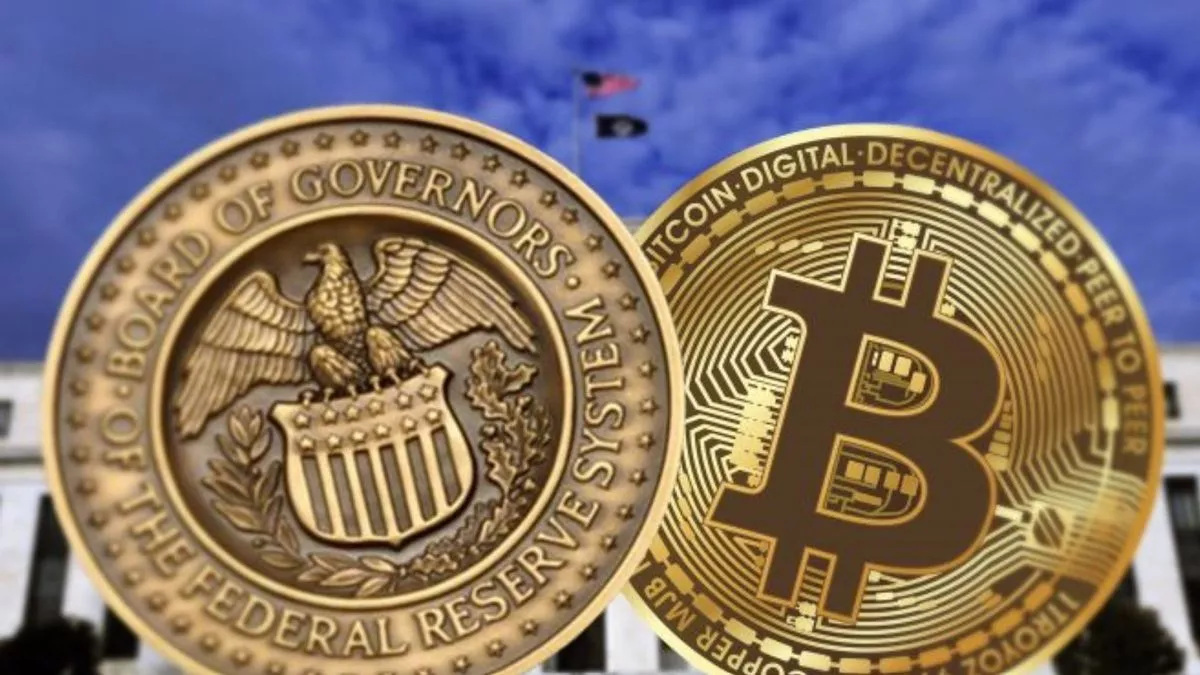
Kevin Warsh’s Digital Dollar Past Raises Red Flags as Fed Chair Speculation Grows
Kevin Warsh’s past support for a digital dollar raises concerns as he emerges as a possible successor to Fed Chair Jerome Powell.
Kevin Warsh has reemerged as a serious contender to lead the Federal Reserve, but his past support for a government-backed digital currency is likely to complicate his prospects at a moment when the issue has become politically radioactive. As speculation builds over who might eventually succeed Jerome Powell, Warsh’s record on central bank digital currencies stands increasingly at odds with the current direction of Republican economic policy.
Warsh, a former Federal Reserve governor and longtime financial executive, is widely regarded as a sharp critic of inflationary policy and a proponent of growth-oriented reforms. Yet his views on digital money place him on uncertain ground. In a 2018 Wall Street Journal op-ed, Warsh argued that the Federal Reserve should consider issuing a “digital dollar,” suggesting it could capture the benefits of innovation while avoiding what he described as illicit activity associated with bitcoin and similar assets.
That position immediately drew criticism from free-market economists and digital asset advocates, who warned that a central bank-issued currency would crowd out private innovation and expand the government’s footprint in monetary affairs. At the time, concerns focused largely on inflation risks and the distortion of competition in the financial system. In the years since, however, a more fundamental objection has come to dominate the debate: surveillance.
Critics argue that a central bank digital currency would create a permanent electronic record of transactions held within government-controlled ledgers. Unlike cash or decentralized digital assets, such a system could enable authorities to monitor, restrict, or potentially censor economic activity. Even in democratic systems, repeated data breaches and politically motivated disclosures have reinforced fears that sensitive financial information could be misused.
The issue has taken on added significance under President Donald Trump, who has made opposition to a CBDC an explicit policy stance. As a presidential candidate in 2024, Trump rejected the concept outright. Upon returning to office, he issued an executive order barring U.S. government agencies from taking steps to establish or promote a CBDC, citing concerns over privacy, freedom, and financial control.
That order, however, leaves open a critical institutional question. The Federal Reserve operates as an independent agency, and a future Fed chair could, in theory, revive CBDC efforts unless Congress enacts a statutory ban. For that reason, the personal views of any nominee matter greatly.
Warsh has attempted to narrow his position in recent years. In a 2022 opinion piece, he argued that he supports only a “wholesale” CBDC, limited to transactions among financial institutions, governments, and foreign central banks. Such a system, he wrote, could improve settlement speed and enhance the global competitiveness of the dollar without extending surveillance to consumers.
Skeptics remain unconvinced. Policy analysts have warned that technical guardrails are fragile, and that once a digital dollar infrastructure exists, political or legal changes could quickly expand its scope. Others argue that privately issued, dollar-backed stablecoins already offer a more effective way to strengthen the dollar’s international role without placing transactional data in government hands.
As the search for the next Federal Reserve chair intensifies, Warsh’s record ensures that digital currency policy will be a central line of scrutiny. With inflation, privacy, and financial freedom all at stake, his past advocacy for a digital dollar is unlikely to fade quietly into the background.