KuCoin Reinvents Token Utility With PulseDrop Reward System Built Around User Participation
KuCoin launches KCS PulseDrop, a rewards system that links trading, staking, and payments to expand the utility of its native token.
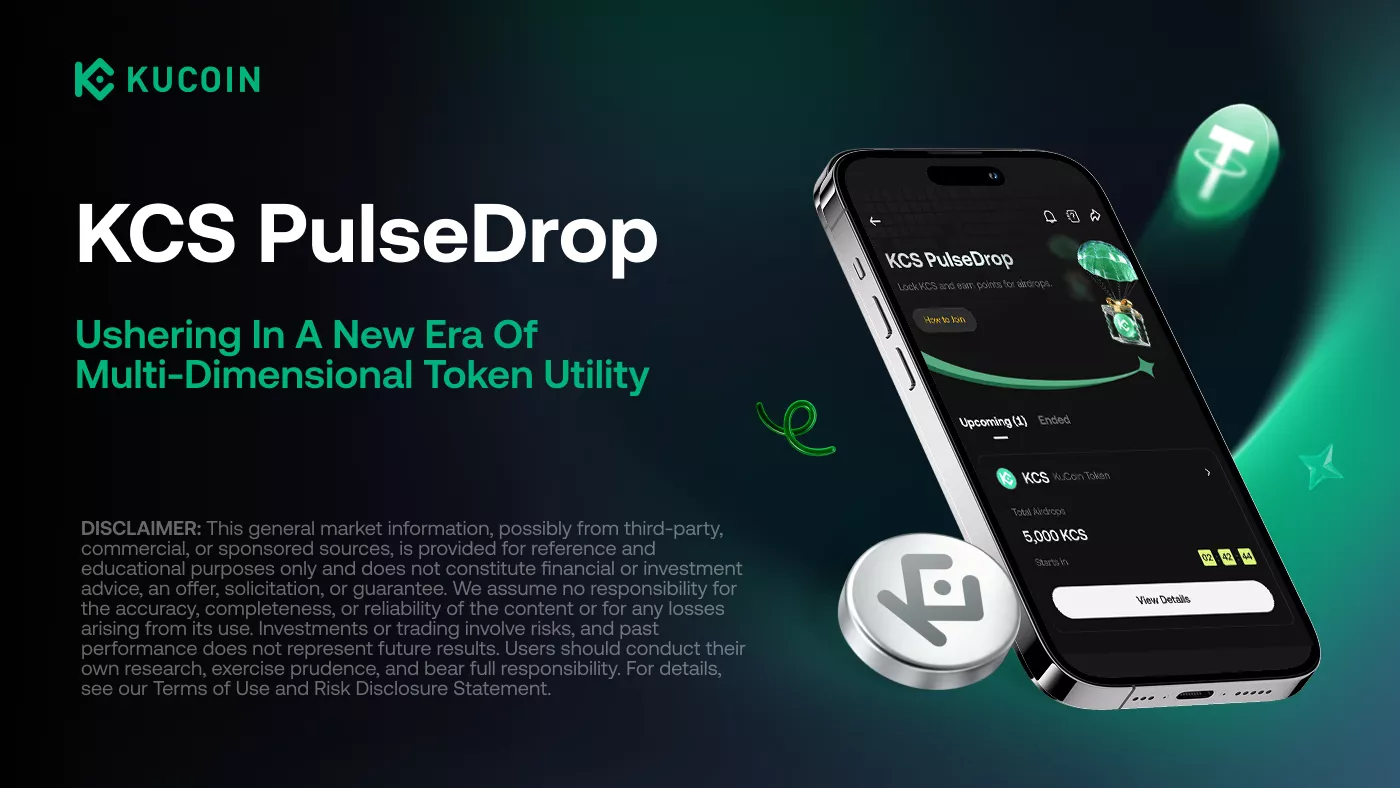
Global cryptocurrency exchangespan>KuCoin/span> has unveiled a new initiative aimed at redefining how users interact with its native token. The program, calledspan>KCS PulseDrop/span>, introduces a reward framework that turns everyday platform activity into a points-based system designed to deepen engagement and expand the practical role of the exchange’s token,span>KuCoin Token (KCS)/span>.
The concept behind PulseDrop reflects a growing trend within the digital asset industry. Exchanges are increasingly attempting to transform their native tokens from passive investment assets into integral components of broader platform ecosystems. KuCoin’s new model seeks to do precisely that by tying rewards directly to user behavior across multiple services within the platform.
Under the system, users accumulate points through a range of activities including spot or futures trading, staking KCS, and completing payments through the exchange’s payment channels. Transactions conducted through tools such as KuCard, peer-to-peer trading, and KuCoin Pay also contribute to the points tally. Over time, those points determine each participant’s share of reward distributions.
By connecting multiple functions of the exchange under a unified reward structure, KuCoin is attempting to create what it describes as a “participation economy.” Rather than rewarding users solely for holding tokens or generating short bursts of trading volume, the system encourages consistent engagement across the ecosystem. In effect, the exchange is reframing KCS as a tool for active participation rather than a token held primarily for trading fee discounts.
The PulseDrop structure also introduces tiered point mechanics and multipliers. These features allow users to accelerate rewards by performing certain actions, such as trading particular digital assets or increasing their involvement with KCS-related activities. Additional incentives are linked to payment services, reinforcing the exchange’s effort to integrate cryptocurrency spending with its broader financial infrastructure.
Industry observers note that the strategy reflects a larger shift among global crypto platforms. As competition intensifies, exchanges are experimenting with loyalty-style programs that embed token utility into everyday interactions. Rivals such asspan>Binance/span> andspan>OKX/span> have introduced similar initiatives designed to keep users engaged beyond speculative trading.
For KuCoin, the approach serves multiple purposes. It encourages sustained platform usage, expands the role of its native token, and creates a more transparent framework for distributing project rewards to users. By basing allocations on participation rather than the sheer size of token holdings, the exchange also attempts to broaden access to opportunities tied to new listings and ecosystem projects.
The launch arrives as KuCoin continues to expand its global presence. The exchange now serves more than 40 million users across over 200 countries and has recently pursued regulatory progress in key jurisdictions. Under the leadership of CEOspan>BC Wong/span>, the company has secured licensing milestones in markets such as Austria under the European Union’sspan>Markets in Crypto-Assets Regulation/span> framework and in Australia.
By linking trading, staking, and payments within a unified reward economy, PulseDrop represents an effort to weave token incentives into every layer of the platform. In doing so, KuCoin is betting that sustained participation, rather than speculative hype, will become the foundation of long-term growth in the evolving digital asset marketplace.