SBI Holdings Targets Singapore’s Coinhako to Anchor Its Digital Asset Ambitions in Asia
SBI Holdings plans majority acquisition of Singapore’s Coinhako to expand its crypto and tokenization strategy across Asia.
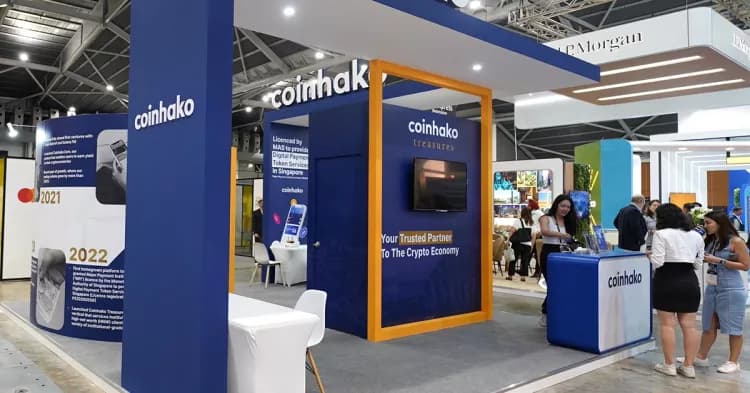
span>SBI Holdings/span> has taken another decisive step in its digital asset strategy, unveiling plans to acquire a majority stake in Singapore-based crypto exchangespan>Coinhako/span>. The proposed transaction, structured through a capital injection and share purchases from existing stakeholders, signals a calculated push to strengthen the Japanese conglomerate’s footprint in Southeast Asia’s fast-growing cryptocurrency market.
The deal will be executed through SBI Ventures Asset Pte. Ltd., the group’s Singapore subsidiary, which intends to sign a memorandum of understanding with Holdbuild Pte. Ltd., Coinhako’s operating entity. While the acquisition remains subject to regulatory approval and final agreement on structure, SBI has indicated that Coinhako is expected to become a consolidated subsidiary upon completion.
Strategically, the move offers more than geographic expansion. Coinhako operates under regulated entities, including a Major Payment Institution license granted by the Monetary Authority of Singapore. That regulatory positioning provides SBI with a ready-made gateway into one of Asia’s most tightly supervised and institutionally credible digital asset jurisdictions. For a company seeking to bridge traditional finance and blockchain infrastructure, Singapore offers both stability and regional influence.
SBI has made no secret of its ambition to integrate conventional financial rails with emerging blockchain-based services. By incorporating Coinhako’s exchange infrastructure and decade-long operational track record, the group aims to accelerate initiatives tied to tokenized securities, stablecoins and cross-border digital asset flows. Analysts view the acquisition as a structural investment in infrastructure rather than a simple equity play.
Yoshitaka Kitao, Chairman, President and CEO of SBI Holdings, framed the deal within a broader industry transformation. “In this era of increasing tokenization, the importance of a global infrastructure for digital assets has never been greater,” he said, underscoring the company’s view that tokenization will redefine capital markets across Asia and beyond. Integrating Coinhako, he suggested, would help expand digital corridors that connect regional investors with global blockchain ecosystems.
The acquisition aligns with SBI’s pattern of building layered exposure to the crypto economy. Rather than pursuing speculative ventures, the group has consistently focused on licensed platforms, regulated products and institutional-grade services. This approach reflects an effort to position itself as a conduit between traditional financial institutions and decentralized networks at a time when regulators across Asia are clarifying frameworks for stablecoins and tokenized instruments.
For Coinhako, the partnership offers access to capital depth and an established financial network. The exchange’s leadership has indicated that collaboration with SBI could strengthen its ability to deliver institutional-grade solutions and expand services across multiple Asian markets. In an increasingly competitive environment where exchanges compete on compliance, liquidity and product sophistication, alignment with a major Japanese financial group may prove decisive.
More broadly, the proposed transaction reinforces Singapore’s status as a strategic node in Asia’s digital asset landscape. As regional governments balance innovation with regulatory oversight, established financial conglomerates such as SBI are seeking to anchor their blockchain ambitions within credible jurisdictions.
If completed, the acquisition would deepen SBI’s integration of traditional finance and crypto infrastructure, advancing its vision of a tokenized financial ecosystem that spans borders, asset classes and investor profiles. In Asia’s evolving digital economy, scale and regulation may matter as much as technology itself.