The Chain of Trust: A Forty-Year Architecture of Human Agreement
From 1991 research to the global infrastructure of 2026, explore how blockchain became the world's most secure architecture for human agreement.
Overview
In 2026, we view the blockchain not merely as a ledger for currency, but as the first successful implementation of objective, mathematical truth in a digital world. It is the culmination of a quest to solve a fundamental human problem: how can two parties who do not trust each other agree on a shared reality without a third-party arbiter? The story of blockchain is the story of humanity's transition from "Institutional Trust" (trusting a bank or a king) to "Algorithmic Trust."
Explanation (In-Depth)
To understand the narrative of blockchain is to understand the concept of the "State Machine." At any given moment, a blockchain represents the current "state" of ownership or data.
Real-World Examples (Historical Context)
Advantages/Pros
Disadvantages/Cons
Market Sentiment
In 2026, the initial "hype" has been replaced by "quiet utility." The sentiment is no longer about the price of the tokens, but the resilience of the networks. Governments are now utilizing these same architectures for Central Bank Digital Currencies (CBDCs), acknowledging that the Cypherpunks were right about the efficiency of the tech, even if they disagree on the politics of decentralization.
Conclusion
The journey of the blockchain has been a slow move from the fringes of cryptography to the center of global infrastructure. It has proven that we do not need a central authority to maintain the integrity of our history or our wealth. As we look back from 2026, the blockchain is seen as the invention that finally allowed the internet to have a "memory" that cannot be corrupted.
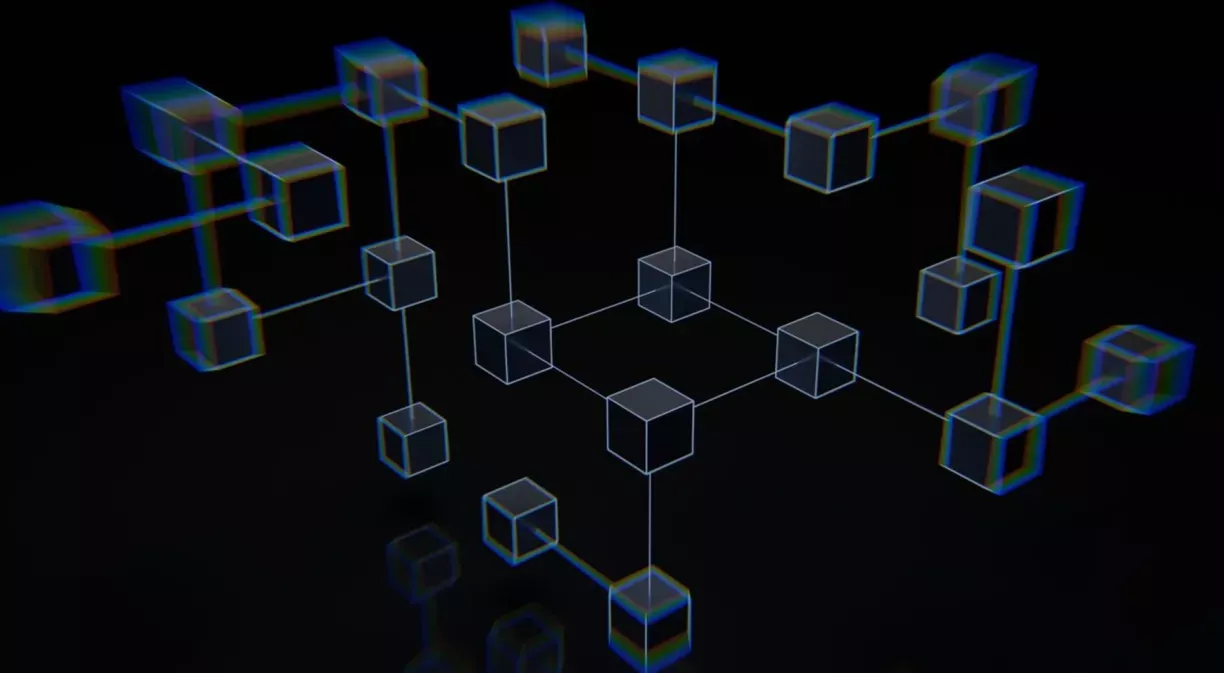
- The Chronological Anchor:Every ten minutes (in Bitcoin's case) or every few seconds (in Ethereum's), the network pauses to "seal" history. This is done through a cryptographic hash that links the current block to the previous one. If you change a single comma in a document from 2012, every subsequent link in the chain breaks.
- The Distributed Oracle:The power of the system lies in its redundancy. In 2026, the modularity of blockchains means we have specialized layers. Some chains act as the "Settlement Layer" (the final word), while others act as the "Data Availability" layer, ensuring that everyone can see the proof of what happened.
- The Social Contract:Beyond the code, blockchain is a social agreement. It is a commitment that "rules are law." Unlike a central bank that can change interest rates or seize assets overnight, a blockchain’s rules are transparent and require a massive majority to change.
- The 1991 Prototype:Long before Bitcoin, Stuart Haber and W. Scott Stornetta were obsessed with the integrity of digital records. They realized that for a digital document to be "real," it needed a timestamp that couldn't be faked. They began "chaining" these timestamps together, a concept Satoshi Nakamoto later cited as the primary inspiration for the blockchain.
- The Ethereum Evolution (2015):If Bitcoin was a digital calculator for money, Ethereum turned the blockchain into a global computer. It proved that the ledger could record not just "who has what," but "if X happens, then execute Y."
- The Scalability Renaissance (2024-2026):The narrative shifted from monolithic chains to "Rollups." We learned that we didn't need every computer on earth to verify every coffee purchase. We only need the main chain to verify theproofthat those purchases happened correctly elsewhere.
- Absolute Immutability:Once a record is buried under a few layers of blocks, it is more permanent than a carving in granite.
- 24/7 Finality:Traditional financial markets close on weekends and take days to settle. Blockchains settle in minutes, regardless of borders or holidays.
- Transparency as a Feature:In a world of "fake news" and deepfakes, blockchain provides a verifiable source of origin for data and assets.
- The Cost of Consensus:Running thousands of nodes to do the job of one server is inherently inefficient. We pay for security with computational "waste."
- The Finality Paradox:In a blockchain, there is no "undo" button. While this prevents fraud, it also means human errors—like sending funds to the wrong address—are permanent.
- Governance Deadlocks:Because no one is in charge, making upgrades to the protocol can take years of debate among developers, miners, and users.