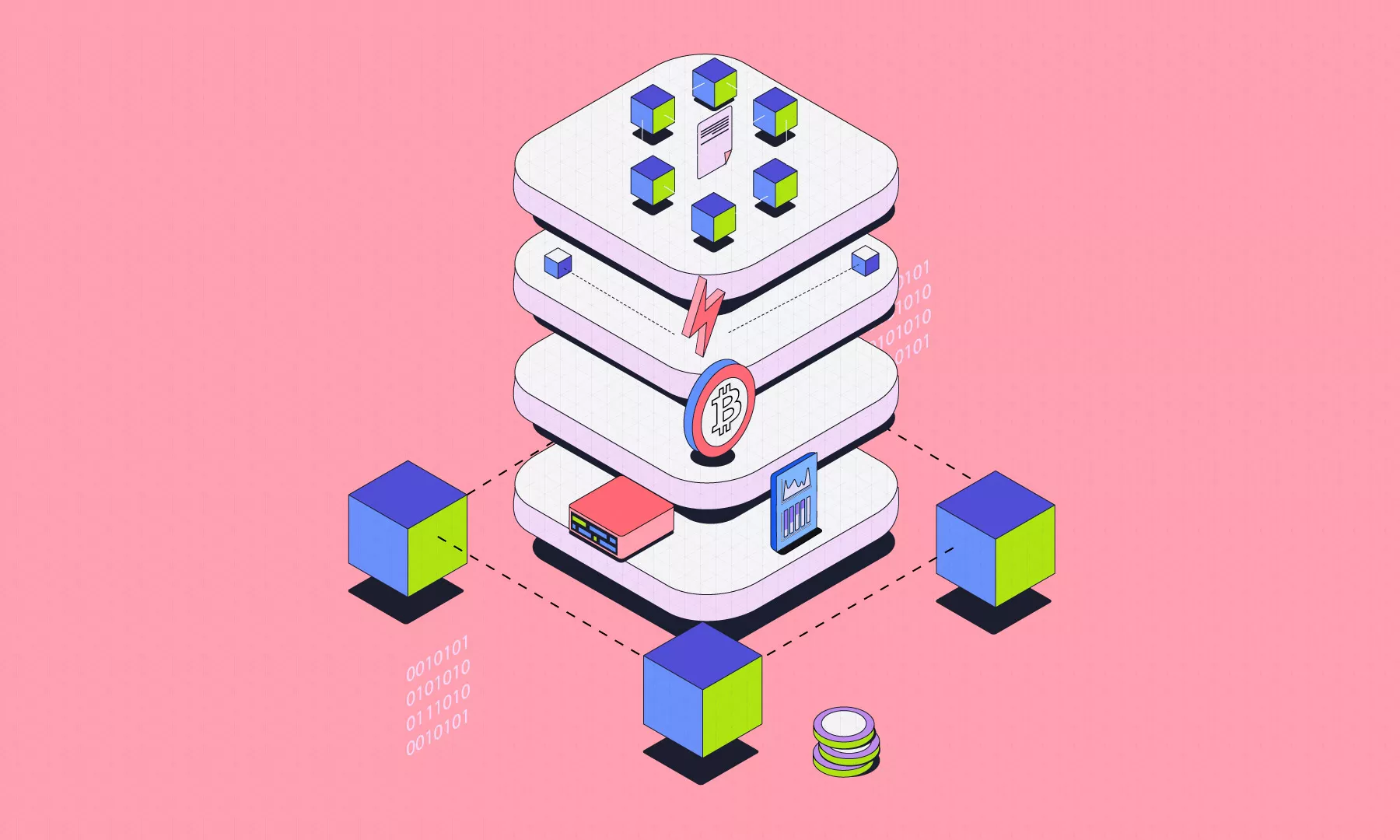
The Layer-3 Emergence: Architectural Paradigm Shift or Unwarranted Complexity?
Are Layer-3 blockchains a necessity or just extra complexity? Discover how L3s are redefining Web3 scaling through recursive proofs and app-specific layers.
Overview
The structural evolution of blockchain networks has moved from monolithic foundations to a sophisticated, tiered architecture designed to solve the persistent limitations of throughput and cost. While Layer-2 (L2) protocols have successfully offloaded execution from the Ethereum mainnet, a new frontier is forming:Layer-3 (L3). These hyper-specialized layers operate atop L2s, functioning as application-specific environments tailored for unprecedented scale. However, their emergence has sparked a profound debate regarding the trade-offs between granular customization and the risks of ecosystem fragmentation. This article analyzes the technical imperatives behind the L3 movement and evaluates whether this additional layer is a vital necessity for mass adoption or an architectural over-extension that complicates the Web3 landscape.
/h3>h3>Explanation (In-Depth)
Layer-3 networks function through a concept known asrecursive scaling. In this model, an L3 does not settle its transactions directly on the Layer-1 (L1) foundation; instead, it utilizes a Layer-2 as its immediate settlement and data availability layer. This creates a nested cryptographic relationship where the L3 compresses data and submits proofs to the L2, which then further aggregates that information for finality on the L1.
The technical superiority of Layer-3 architecture is rooted in several advanced mechanisms:
/h3>h3>Real-World Examples
The infrastructure for the L3 era is being actively deployed by some of the most prominent builders in the industry:
/h3>h3>Advantages/Pros
The strategic deployment of Layer-3 solutions offers several transformative benefits:
/h3>h3>Disadvantages/Cons
The transition to a three-layer model introduces significant systemic challenges:
/h3>h3>Evolution Through Time
The blockchain scaling roadmap has followed a clear trajectory:
/h3>h3>Market Sentiment
The current perception of Layer-3 technology isanalytical and bifurcated. While infrastructure providers and venture capitalists are heavily invested in the "L3-centric" future, some purists argue that optimizing existing L2s should be the priority. The general consensus is that L3s will not be a universal solution for all projects, but will become the standard forhigh-frequency DeFi, institutional sub-networks, and large-scale Web3 gaming, where the need for a sovereign execution environment outweighs the desire for broad-based liquidity.
/h3>h3>Conclusion
Layer-3 blockchains represent the pinnacle of modular engineering, offering a pathway to internet-scale performance that was previously unreachable. While they undeniably introduce new layers of complexity and liquidity challenges, their ability to provide sovereign, ultra-low-cost, and highly customizable environments is indispensable for the next wave of decentralized innovation. L3s should not be viewed as a complication of the stack, but as its refinement. As the technology matures, these layers will likely become invisible to the end-user, providing the silent, powerful engine required for the global-scale applications of the future.
- Dedicated Throughput:By isolating execution to a single app-specific chain, a project can avoid the "noisy neighbor" effect, where high activity on a general-purpose L2 spikes transaction costs for everyone else.
- Bespoke Virtual Machines:L3s offer developers the freedom to move beyond the constraints of the standard Ethereum Virtual Machine (EVM). They can implement specialized state-transition functions or custom logic optimized for specific tasks like high-frequency order books or complex gaming physics.
- Data Availability Flexibility:Unlike L2s that must often adhere to strict data standards to ensure L1 security, L3s can experiment with varied data availability solutions (Validiums or Volitions), significantly reducing the overhead costs associated with storing data on-chain.
- Arbitrum Orbit:This framework empowers developers to launch proprietary L3 chains that settle on Arbitrum’s L2 infrastructure, providing a sandboxed environment for high-scale enterprise and consumer applications.
- zkSync Hyperchains:Leveraging the ZK Stack, these modular networks act as L3s that use zero-knowledge proofs to maintain security while offering near-instant interoperability within the broader zkSync ecosystem.
- Starknet Appchains:Starknet provides the tools for applications to deploy their own dedicated execution layers, utilizing the Cairo language to achieve specialized performance and scalability for intensive computational tasks.
- Granular Economic Control:Developers can define their own gas tokens and fee structures, allowing for a more predictable and sustainable economic model for their specific user base.
- Hyper-Lower Latency:By reducing the distance between execution and settlement through recursive proofs, L3s can achieve sub-second finality essential for real-time digital interactions.
- Optimized Privacy Layers:L3s allow for the creation of privacy-preserving environments where sensitive data can be processed locally and only the cryptographic proof of validity is settled to the public L2.
- Enhanced Customization:From block times to governance parameters, every aspect of the network can be tuned to meet the specific requirements of a single decentralized application.
- Liquidity Silos:Moving assets into isolated L3 environments can fracture the unified liquidity pools that make DeFi efficient, potentially leading to higher slippage and fragmented markets.
- Compounded Security Risks:Every additional layer introduces new trust assumptions and potential points of failure in the smart contract code or the bridging mechanisms between tiers.
- User Experience Friction:Navigating between multiple layers often requires complex bridging and gas management, which can be daunting for non-technical users and complicates the onboarding process.
- Interoperability Hurdles:While communication within the same L2 ecosystem is simplified, transferring value or data between L3s sitting on different L2s remains a significant technical bottleneck.
- The Monolithic Era (2015-2020):Networks tried to handle all functions—execution, settlement, and data—on a single layer, leading to congestion and prohibitive costs.
- The Rollup Era (2021-2023):The industry embraced the modular thesis, with Layer-2 rollups becoming the standard for off-chain execution with on-chain security.
- The App-Specific Era (2024-Present):As L2s became the new "congested" hubs, the focus shifted toward Layer-3s. This era is defined by the transition from general-purpose scaling to hyper-personalized, application-specific infrastructure.