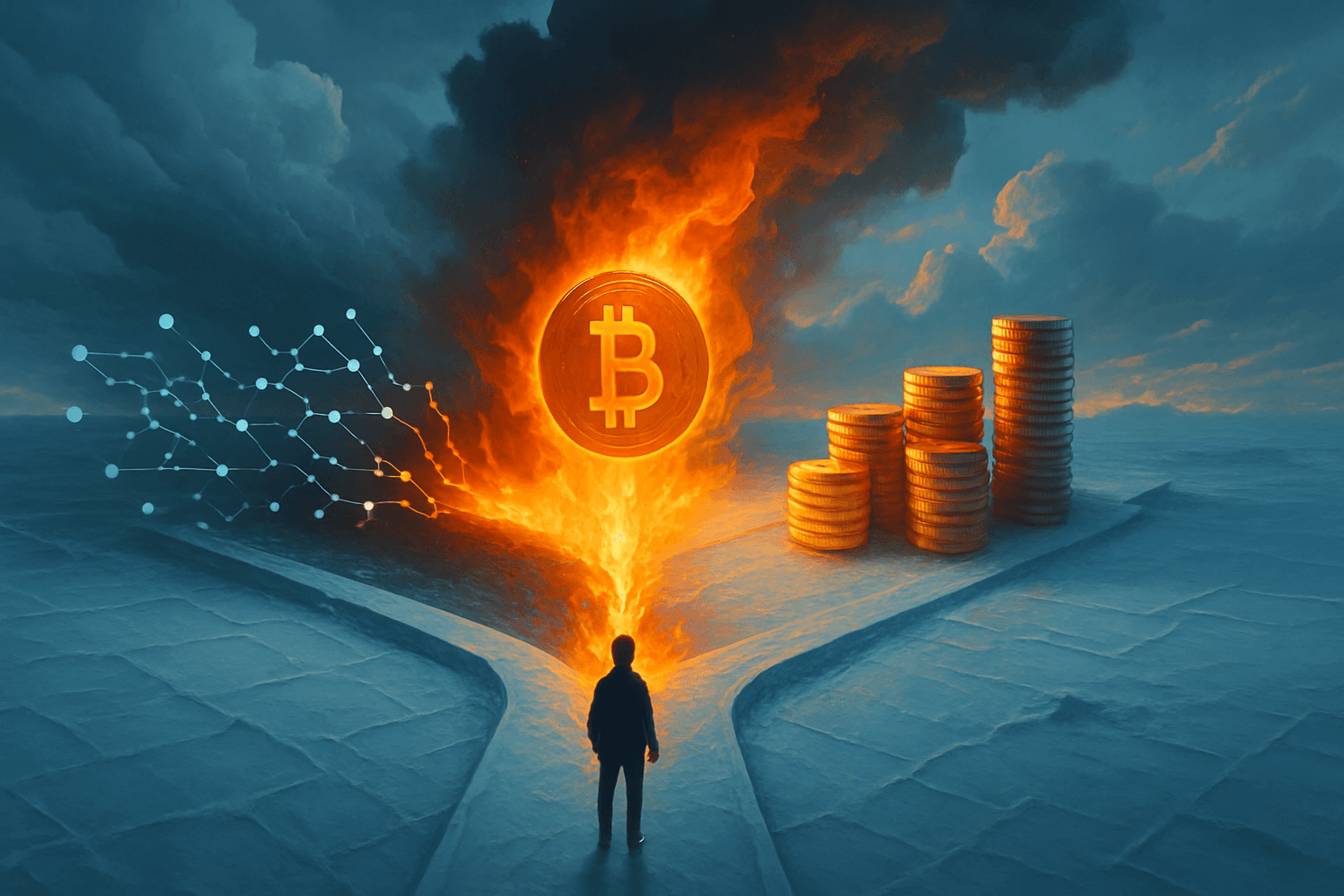
The Machine Economy: When AI Agents Transact on the Blockchain
AI agents are no longer just assistants; they are economic actors. Discover how the x402 protocol on Solana and Base is powering the autonomous Machine Economy.
Overview
The Machine Economy represents a fundamental shift in how value is exchanged across the digital landscape. As AI agents evolve into autonomous entities capable of performing complex tasks—from optimizing supply chains to executing high-frequency trading—they require a native payment infrastructure that is as fast and programmable as they are. Traditional banking systems, with their slow settlement cycles and human-centric KYC protocols, are incompatible with the requirements of 2026’s "agentic commerce." Instead, AI agents are turning to blockchain technology to facilitate frictionless, 24/7 transactions. By utilizing networks like Solana and Base, these machines can pay for the very resources they consume, such as GPU compute and specialized data, creating a self-sustaining ecosystem where code is the primary consumer.
Explanation (In-Depth)
The integration of AI into the blockchain ecosystem is anchored by the emergence ofprogrammable payment protocols, most notably thex402 standard. Based on the original HTTP 402 "Payment Required" status code, x402 allows AI agents to autonomously pay for API access and server resources using stablecoins. This removes the need for traditional subscription models or manual credit card entries, allowing for true machine-to-machine (M2M) commerce.
Technically, this autonomous economy is supported by three pillars:
Real-World Examples
In 2026, several key industries have already been transformed by autonomous agentic transactions:
Advantages/Pros
The rise of autonomous machine commerce offers profound efficiencies for the global economy:
Disadvantages/Cons
The autonomy of AI-driven finance introduces specific systemic risks:
Evolution Through Time
Market Sentiment
Market sentiment is currently categorized ascautiously bullish. While institutional investors are pouring billions into "AI-native infrastructure," there is a parallel push for more robust guardrails. Regulators are increasingly focused on "Know Your Agent" (KYA) frameworks to ensure that autonomous spending doesn't become a vehicle for illicit activity. Despite these concerns, the prevailing view is that by the end of the decade, the volume of machine-to-machine transactions will dwarf that of human-driven commerce.
Conclusion
The Machine Economy is the ultimate realization of the programmable internet. By equipping AI with the ability to transact on-chain, we are not simply automating finance; we are creating a more resilient and efficient foundation for global digital life. As Solana and Base refine their infrastructure to support these autonomous entities, the barrier between intelligence and commerce will continue to dissolve. The future belongs to the agents that can think, act, and—most importantly—pay for their own progress.
- Cryptographic Sovereignty:AI agents manage their own treasuries via non-custodial wallets. These are often secured using Multi-Party Computation (MPC), which fragments private keys to prevent any single point of failure while allowing the agent to sign transactions independently.
- Permissioned Spending:Through advanced smart contract primitives like "spend permissions," human owners can grant agents the right to execute transactions within strictly defined parameters, such as a maximum daily budget or a specific list of verified service providers.
- High-Velocity Settlement:For the Machine Economy to function, settlement must happen at the speed of the machine’s reasoning. Solana’s sub-second finality and Base’s deep integration with institutional liquidity on Ethereum have made them the primary battlegrounds for x402 traffic, handling hundreds of thousands of automated payments daily.
- GPU Compute Marketplaces:On platforms likeAkashandRender, AI agents autonomously bid for and rent GPU power to scale their own processing capabilities, paying for hardware usage by the minute in a fully liquid market.
- Data-as-a-Service (DaaS):Agents acting as specialized researchers pay micro-fees to oracle networks likePythorChainlinkto receive high-fidelity, real-time data required for predictive modeling or trading.
- Agent-to-Agent Services:On protocols likeBittensor, one AI model can pay another specialized agent to solve a specific sub-task, such as image recognition or linguistic translation, facilitating a collaborative intelligence network.
- Automated Treasury Operations:DeFi vaults now employ autonomous agents that monitor yield opportunities 24/7, paying for swaps and liquidity provisions across various chains to maximize returns for their stakers.
- Instant Finality:By removing human approval loops, transactions occur at the speed of software, allowing for hyper-efficient resource allocation.
- Granular Micro-Payments:Blockchain enables the transfer of fractions of a cent, making it feasible for agents to pay for a single API call or a few seconds of compute time.
- 24/7 Market Participation:Unlike human-managed firms, machine-driven treasuries operate without rest, ensuring constant liquidity and optimization in every global market.
- Reduced Operational Overhead:Autonomous agents eliminate the administrative burden of managing thousands of individual subscriptions and invoices, replacing them with a single, transparent on-chain ledger.
- Economic Hallucinations:A logical error in an agent’s code could lead to "feedback loop" spending, where a machine drains its entire budget on useless or redundant services before a human can intervene.
- Liability and Accountability:The legal framework for machine-executed financial errors remains a gray area. Determining whether a developer or an owner is responsible for a machine’s "bad trade" is a major hurdle in 2026.
- Liquidity Fragmentation:As millions of agents deploy capital across isolated L3 appchains and L2 subnets, maintaining deep, unified liquidity pools becomes increasingly difficult.
- Security Vulnerabilities:While blockchains are secure, the "agentic layer" is susceptible to prompt injection attacks or intent hijacking, where malicious actors trick an agent into signing a fraudulent payment.
- The Scripting Phase (Pre-2024):Bots were hard-coded to follow rigid rules. Payments were managed via traditional centralized accounts with pre-loaded credits.
- The Integration Phase (2025):The first "Agent Wallets" emerged, allowing LLMs to access on-chain liquidity. Protocols like x402 were introduced to standardize how machines ask for and pay for resources.
- The Autonomy Phase (2026):AI agents have evolved into "sovereign economic actors." They now manage their own P&L statements, negotiate with other machines, and contribute to the "Agentic GDP" of the blockchain networks they inhabit.