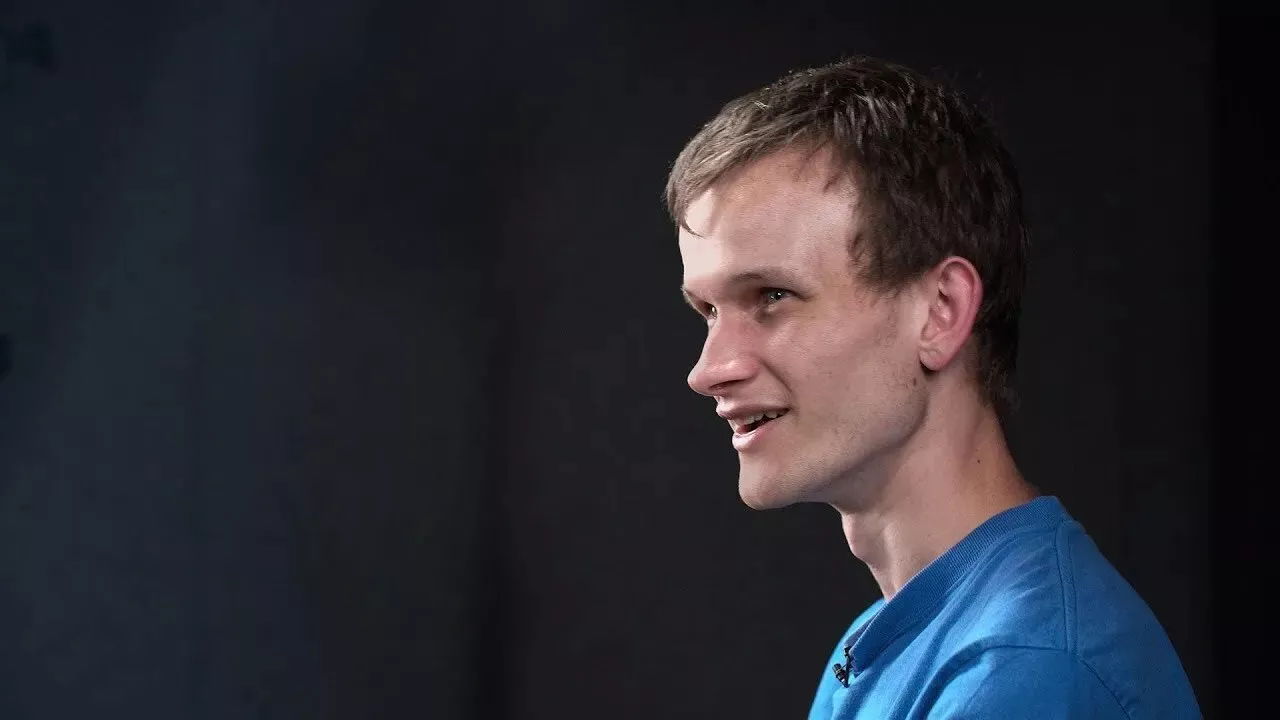
Vitalik Buterin Reconsiders Full Verification as Zero-Knowledge Proofs Reshape Ethereum’s Future
Vitalik Buterin revisits full Ethereum verification, arguing zk-proofs now make independent user verification a viable and vital fallback.
Ethereum co-founder Vitalik Buterin has publicly revised a position he once held as foundational to blockchain design, signaling a shift that reflects both technological progress and a more sober view of real-world risks. Revisiting a debate that dates back to 2017, Buterin now argues that advances in zero-knowledge proofs make full user-level verification not only viable, but an essential fallback for Ethereum’s long-term resilience.
At the center of the reassessment is the so-called “mountain man” model of verification, a metaphor for users independently verifying blockchain correctness without relying on third parties. Buterin previously dismissed the idea as impractical, arguing that forcing users to replay every transaction in history was an unreasonable burden. In a recent reflection, however, he wrote that he “no longer agrees” with that earlier view, adding that he has become “a much more willing connoisseur of mountains.”
The original disagreement emerged from a clash with financial cryptographer Ian Grigg, who proposed that blockchains should record transaction order but not persist full state. Under that minimalist approach, balances and contract states are reconstructed locally and discarded, leaving users with a choice between running full historical nodes or trusting external providers. Ethereum deliberately rejected that model by committing state directly into block headers, allowing users to prove specific values using Merkle proofs under the assumption of an honest majority.
What has changed, according to Buterin, is the maturation of zero-knowledge systems, particularly ZK-SNARKs. These cryptographic tools allow users to verify the correctness of Ethereum’s state without re-executing every transaction. In his words, the technology functions like a “magic pill” that delivers the benefits of full verification without the historical computational cost. With zk-proofs, millions of computation steps can be validated efficiently, undermining the old tradeoff between scalability and independent verification.
The argument is not purely technical. Buterin’s rethink is also driven by a reassessment of how blockchains operate under stress. He points to censorship events, validator concentration, peer-to-peer outages and network latency spikes as examples of failure modes that theoretical models often downplay. In those scenarios, reliance on developers, large node operators or intermediaries becomes a liability. As he put it, the solution cannot always be to “call the devs,” especially if developers themselves risk becoming a de facto center of control.
Instead, Buterin reframes full verification as a strategic safeguard rather than a default lifestyle. He describes the “mountain man’s cabin” as Ethereum’s BATNA, a best alternative that users may rarely rely on but must know exists and remains functional. The goal is not for everyone to verify everything all the time, but to preserve the credible option of doing so when trust assumptions fail.
This shift arrives as Ethereum increasingly positions itself as global settlement infrastructure rather than an experimental platform. Markets now tend to price attributes like censorship resistance, execution guarantees and verifiability as core fundamentals. Buterin’s evolving stance reflects that maturity, acknowledging that decentralization is not just an ideological preference, but an insurance policy against the ways systems break in practice.
By embracing stronger verification guarantees enabled by zero-knowledge proofs, Ethereum is signaling that scalability and independence no longer have to be opposing forces. The mountain may be remote, but maintaining the path to it is becoming part of the protocol’s long-term design philosophy.