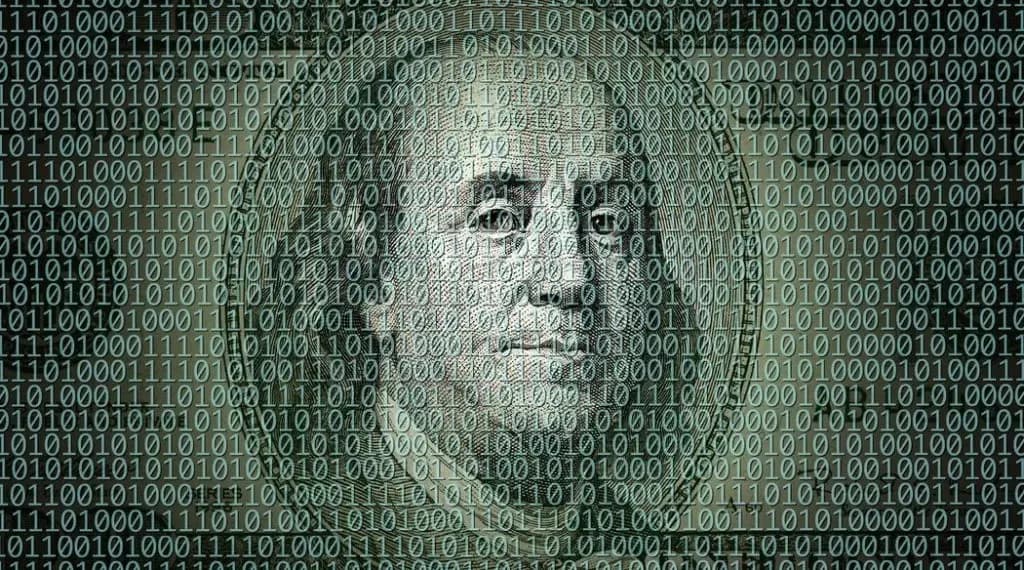
Washington hardens its stance against a digital dollar as lawmakers warn of financial surveillance risks
US lawmakers push to permanently ban a digital dollar, warning a CBDC could expand financial surveillance and threaten economic freedom.
A growing group of lawmakers in Washington is intensifying efforts to permanently block the creation of a central bank digital currency in the United States, arguing that a government-issued digital dollar could open the door to unprecedented financial surveillance and expanded federal control over personal transactions.
The push is being led by Congressmanspan>Michael Cloud/span>, who recently sent a formal letter to congressional leadership urging lawmakers to ensure that the Federal Reserve is never granted the authority to issue a central bank digital currency. The message was addressed to House Speakerspan>Mike Johnson/span> and Senate Majority Leaderspan>John Thune/span> and was supported by 28 additional members of Congress concerned about the long-term consequences of a digital dollar.
Supporters of the initiative argue that a permanent ban is necessary because temporary restrictions could leave the door open for future administrations to revive the idea. According to Cloud, any delay that merely postpones the launch of a central bank digital currency fails to address the deeper concern that such a system could fundamentally alter the relationship between citizens and the financial system.
At the center of the debate is the fear that a government-controlled digital currency could enable widespread monitoring of financial activity. Critics warn that if every transaction were recorded within a centralized infrastructure overseen by authorities, it could erode the privacy protections traditionally associated with cash and existing banking systems. Lawmakers backing the letter caution that a digital dollar might allow federal agencies to track spending patterns, freeze accounts, or impose restrictions on how funds are used.
These concerns have become increasingly prominent as governments around the world explore central bank digital currencies. While supporters argue that CBDCs could modernize payments and improve financial efficiency, critics in the United States see potential risks to civil liberties if the technology is implemented without strict safeguards.
The latest push in Congress follows the review of a proposal included in the legislative package known as thespan>21st Century ROAD to Housing Act/span>. That measure contains an amendment that would prevent the Federal Reserve from issuing a central bank digital currency until 2031. However, lawmakers backing the new initiative argue that delaying the possibility of a digital dollar does little to eliminate the long-term risk.
Instead, they are advocating for stronger legislative language already proposed in earlier bills. One such measure is thespan>Anti CBDC Surveillance State Act/span> introduced byspan>Tom Emmer/span> in 2025. The bill passed the House of Representatives but has yet to receive approval in the Senate. Its supporters argue that the legislation provides a clearer safeguard by explicitly prohibiting the Federal Reserve from issuing a central bank digital currency.
Another proposal referenced in the debate is thespan>No CBDC Act/span> introduced by Senatorspan>Mike Lee/span> earlier in 2025. That bill sought to prevent both the Federal Reserve and the Treasury Department from creating or distributing a digital dollar, although it stalled before advancing through Congress.
For advocates of a permanent ban, the issue is not simply about financial technology but about the balance between innovation and individual freedom. They argue that without firm legislative limits, a central bank digital currency could grant unelected institutions far greater influence over how Americans access and use their money.
As the debate intensifies, the future of a digital dollar remains uncertain. What is clear, however, is that skepticism toward government-issued digital currencies is gaining traction within parts of Congress, where lawmakers increasingly frame the issue as one of financial privacy and constitutional protections rather than technological progress.