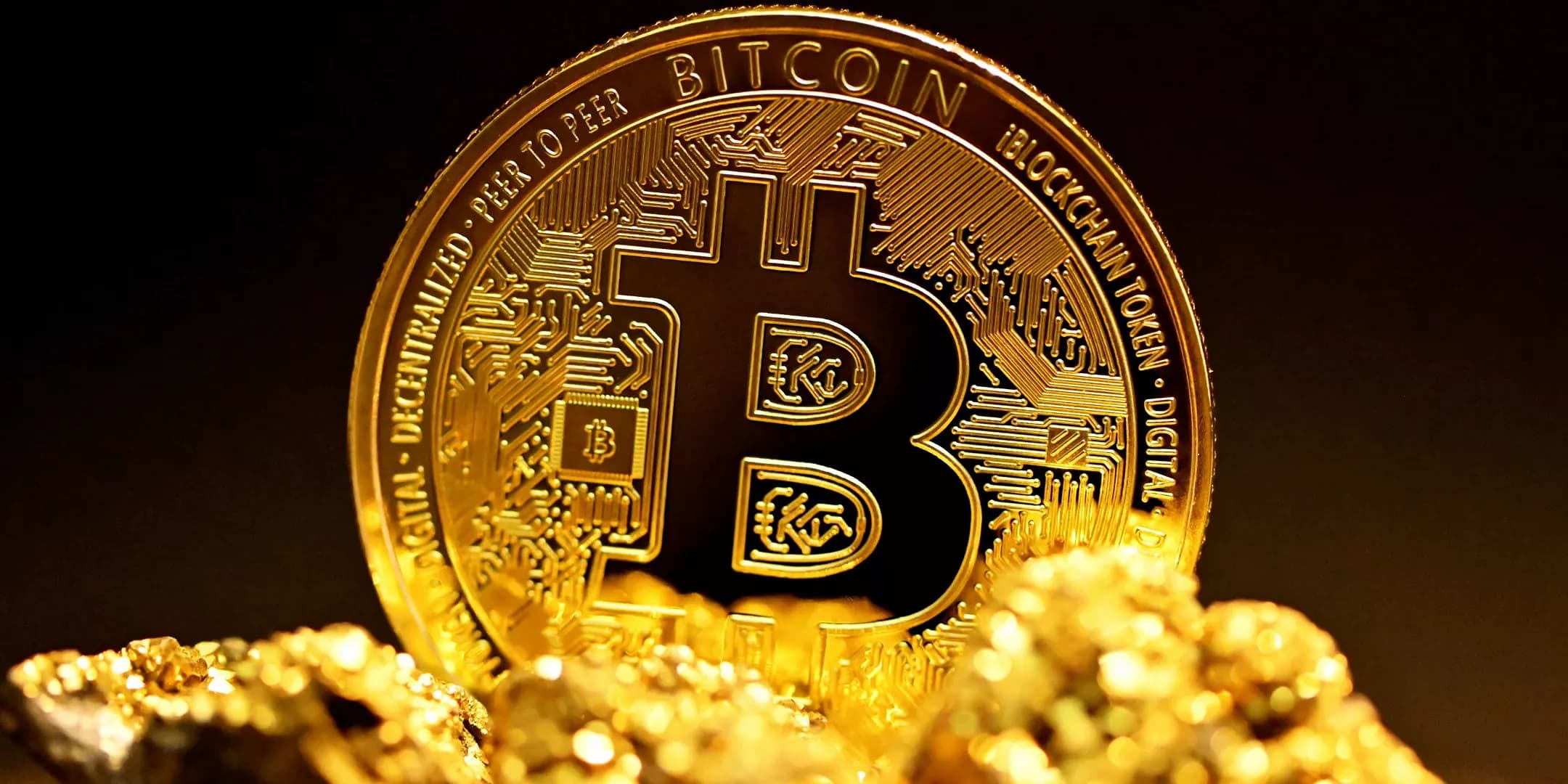
Why Bitwise Is Pairing Bitcoin and Gold to Bet Against a Weaker Dollar
Bitwise launches a Bitcoin-gold ETF, betting that scarce assets can hedge against rising debt and long-term currency debasement.
For much of the past year, Bitcoin has struggled to live up to its reputation as “digital gold.” While the metal surged to new highs, the world’s largest cryptocurrency lagged badly, raising doubts about its role as a hedge in times of macroeconomic stress. Yet asset managers are not abandoning that thesis. Instead, they are doubling down on it, reframing Bitcoin not as a short-term safe haven, but as part of a longer-term strategy against currency debasement.
/p>p>That conviction explains why Bitwise has launched the Bitwise Proficio Currency Debasement ETF, a product that blends exposure to Bitcoin and gold under a single investment vehicle. The premise is straightforward but ambitious: as fiscal deficits expand and fiat currencies lose purchasing power, scarce assets should regain relevance. Gold has played that role for centuries. Bitcoin, Bitwise argues, is its digital counterpart.
/p>p>The idea of the “debasement trade” rests on growing unease about government debt and monetary expansion, particularly in the United States. Federal debt is approaching $40 trillion, and the dollar has lost roughly 40% of its purchasing power over the last two decades. In that context, Bitwise’s chief investment officer Matt Hougan has described hard assets as a missing component in modern portfolios, especially at a time when traditional equities and bond-based ETFs have struggled to preserve real value. By combining the historical scarcity of gold with the algorithmic scarcity of Bitcoin, he argues, investors gain a more robust hedge against the long-term erosion of fiat money.
/p>p>Early market response suggests that the narrative resonates. On its first trading day, the ETF recorded more than $13 million in volume and surpassed $50 million in assets under management. That interest did not emerge in a vacuum. A recent Bitwise survey found that institutional investors ranked alternative hedges against currency debasement just behind stablecoins in terms of demand. Competitors are moving in the same direction, with firms like 21Shares launching similar products, signaling that the theme is gaining traction across the industry.
/p>p>Still, the strategy comes with a clear tension. Over the past twelve months, gold has rallied dramatically, while Bitcoin has fallen sharply, underperforming not only precious metals but other perceived safe havens such as silver. The correlation between Bitcoin and gold, which once supported the “digital gold” narrative, turned negative after a major crypto market crash in October 2025 and has yet to recover meaningfully. In early 2026, renewed geopolitical tensions and stress in Japan’s bond market pushed gold higher again while Bitcoin slipped, reinforcing the divergence.
/p>p>Whether that decoupling proves temporary remains an open question. Bitwise is effectively betting that short-term performance gaps matter less than structural forces: rising debt, political pressure on central banks, and declining confidence in fiat currencies. The launch of its Bitcoin-gold ETF is less a call on immediate price action and more a statement about how portfolios may evolve in an era of persistent macro uncertainty. For investors worried about the long arc of currency value, the debasement trade is no longer a fringe idea. It is becoming a product.