Why Robert Kiyosaki Now Frames Bitcoin as Scarcer—and Stronger—Than Gold
Robert Kiyosaki argues Bitcoin’s fixed supply makes it a stronger long-term store of value than gold despite controversy around his past claims.
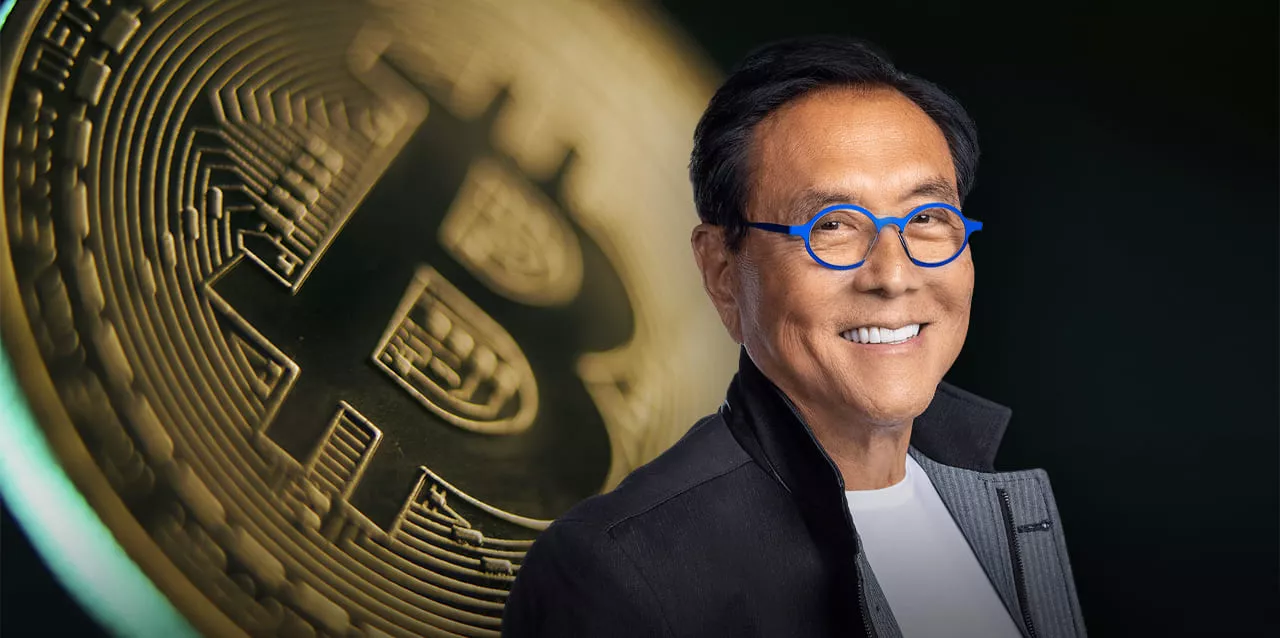
Robert Kiyosaki, the outspoken author of Rich Dad Poor Dad, has once again placed Bitcoin at the center of his investment philosophy, arguing that the cryptocurrency represents a more compelling store of value than gold. In a recent social media post, Kiyosaki reiterated a position he has defended for years: scarcity, not tradition, determines long-term value, and Bitcoin’s architecture gives it an advantage that precious metals cannot replicate.
Kiyosaki has long encouraged diversification across assets such as gold, silver, and Bitcoin. Yet when pressed to choose between them, he has made it clear that Bitcoin stands apart. His reasoning is rooted in supply mechanics. Gold, while physically limited, is theoretically infinite. Rising prices incentivize increased mining activity, expanding supply as new deposits are discovered or previously unviable reserves become profitable. Bitcoin, by contrast, operates under an immutable monetary policy. Its supply is capped at 21 million coins, a limit enforced by code rather than market behavior or human discretion.
At present, nearly 20 million bitcoins have already been mined, leaving fewer than two million yet to enter circulation. Once that threshold is reached, no additional supply can be created. For Kiyosaki, this engineered scarcity is not a flaw but a defining strength. He has described it as a “brilliant strategy” that could continue to support Bitcoin’s valuation over time, particularly in an era marked by monetary expansion and persistent concerns over currency debasement.
In his own words, Kiyosaki noted that he is “glad I bought my Bitcoin early,” adding that he remains active in traditional commodity sectors by mining for gold and drilling for oil. The statement reflects a broader worldview in which hard assets and alternative stores of value serve as protection against systemic financial risk. Bitcoin, in this framework, is positioned not as a speculative gamble but as a digital counterpart to commodities that have historically preserved wealth.
However, Kiyosaki’s commentary has not been without controversy. Critics frequently point to inconsistencies in his public statements about Bitcoin accumulation and disposal. Over the past year, he has claimed to be buying Bitcoin even as prices surged past six figures, only to later assert that he stopped accumulating the asset when it traded near $6,000—a level last seen during the market turmoil of 2020. In another instance, he stated that he would never sell his Bitcoin holdings during downturns, yet later disclosed that he had liquidated a position acquired at lower prices to fund investments in healthcare facilities and advertising businesses.
These apparent contradictions have fueled skepticism about the reliability of his pronouncements. Still, Kiyosaki’s influence remains significant, particularly among retail investors drawn to his critique of traditional financial systems. Whether or not his personal trading history aligns perfectly with his rhetoric, his central argument resonates within the broader Bitcoin narrative: predictable scarcity in a world of expanding supply is a powerful proposition.
Kiyosaki’s comparison between Bitcoin and gold reflects a shifting investment conversation. As digital assets mature and macroeconomic uncertainty persists, the debate is no longer about whether Bitcoin belongs alongside traditional stores of value, but whether its structural design gives it an edge that legacy assets cannot easily match.